Treading Lightly
Treading Lightly

Warm weather wonders

Yesterday as I was sweating through my shirt at work and trying to keep my sunscreen out of my eyes I couldn’t help but wonder what this summer would do for belief in global warming. It seems like any time it snows, people in the United States decide climate change isn’t real. I have tried to explain the global warming trends to my grandfather until I was blue, and yet he still disagrees with me because he got snow at his house and cities across the East were buried in snow this winter.

Image courtesy of Nirmala’s Mind
And yet that snow, and this warming trend across the United States are both part of climate change. In the United States we will have areas of cooling, warming, and desertification. It is not that every single place in the world will warm and no longer experience cool weather or snow. Instead it is the change in climate of that location due to increases in greenhouse gasses that are raising the earths average temperatures.
Image courtesy of Is it getting warmer
Sadly, I still cannot help but wish that as summers heat up and people get annoyed with the heat that they will, at least for the summer, consider that climate change is an issue they should be concerned about.
Image courtesy of Gravity Wiki
I don’t know about you, but this map make me wonder more about the global impacts of climate change than the currant climate or weather in the tiny portion of the world that I live my own life in.

My sunscreen failure

I know I have been all about sun protection lately, so I thought I should admit my failure so no one else has to have the same problem. I have had two major issues in the last few weeks of work. The first is that for some reason I keep forgetting to reapply. I get so caught up in everything that I am doing at work that before I know it my shift is over and it has been 4 hours since the last time I put on any sunscreen.

My other major problem is that the sunscreen I am using is from last summer. My mom is constantly telling me that sunscreen doesn’t work after it’s a year old. I remember it and I understand why it would no longer work, and yet it still kills me to throw away a half full tube. In hindsight, I think it would be better to throw away the tube and protect my skin with some new sunscreen instead of using the old stuff and getting burned or freckled and tan (which are both signs of skin damage).

I have been trying to wear my long sleeve shirt as much as possible, but with the summer starting to heat up, I have been getting really hot sitting in the sun. Part of the problem is that the long sleeve shirts for my job are made to be warm. They are the uniform for the guards in the winter, not a sun protection idea for the guards in the summer.

I haven’t gotten really burned yet this summer, and yet my arms are starting to tan, I have a swimsuit tan on my back (even though I put on sunscreen and then waited 20 minutes for it to really set before I got in), and my hands and forearms are full of freckles.

I guess this week I will be investing in some new sunscreen. And I will find ways to keep cool while wearing my long sleeves so I don’t have to worry so much about protecting my skin.

Lemon Cupcakes

Our Meyer lemon tree in the backyard is starting to fall over because it has so many lemons all on one side. After harvesting a ton of them because I felt sorry for it, I decided I wanted to make lemon cupcakes. It turned out one of the hardest parts of making them was actually picking a recipe. I couldn’t decide between 5 recipes, and I ended up just picking the one that I already had all of the ingredients for. I do, however, have the other recipes bookmarked so I can find the best recipe. By the end of the summer I should have one I really like (I have decided I should wait at least a week before I make another batch).

It seems like lately cupcakes are hip and trendy, and yet I chose to make them because they are incredibly easy to share (so I don’t eat the entire cake myself), easy to make, and they are pre-portioned for your eating pleasure.
This recipe is from here, while the frosting I changed to be less butter and more flavor.

Ingredients:

Cake:
4 room temperature eggs, separated
3 cups all purpose flour
4 teaspoons baking powder
1/2 teaspoon salt
2 sticks of room temperature butter
2 cups sugar
1 cup room temperature milk
1 teaspoon vanilla extract
3 teaspoons fresh lemon juice
1 and a half tablespoon lemon zest
Frosting:
1 stick butter
3 cups powdered sugar
1 teaspoon vanilla extract
2 teaspoons fresh lemon juice
3 teaspoons lemon zest
To start, the recipe has you beat the egg whites until they make stiff peaks before anything else is done. I have seen my mom do this for other recipes quite a few times and I figured it wouldn’t be a big deal for me. The trouble, for some ridiculous reason, started with cracking the eggs. Normally, I swear, I crack eggs efficiently and without scattering bits of shell everywhere. Not this time. I even broke the yoke once before I could separate it from the whites. I also made a huge mess on the counter when separating them. Not to worry, however! It was a disaster, but my whites turned out really well.
Next I had to mix the dry ingredients separately. This is kind of pathetic, but for some reason I get annoyed when recipes ask for this. I hate having to do the extra dishes. However, it does help incorporate the ingredients effectively.
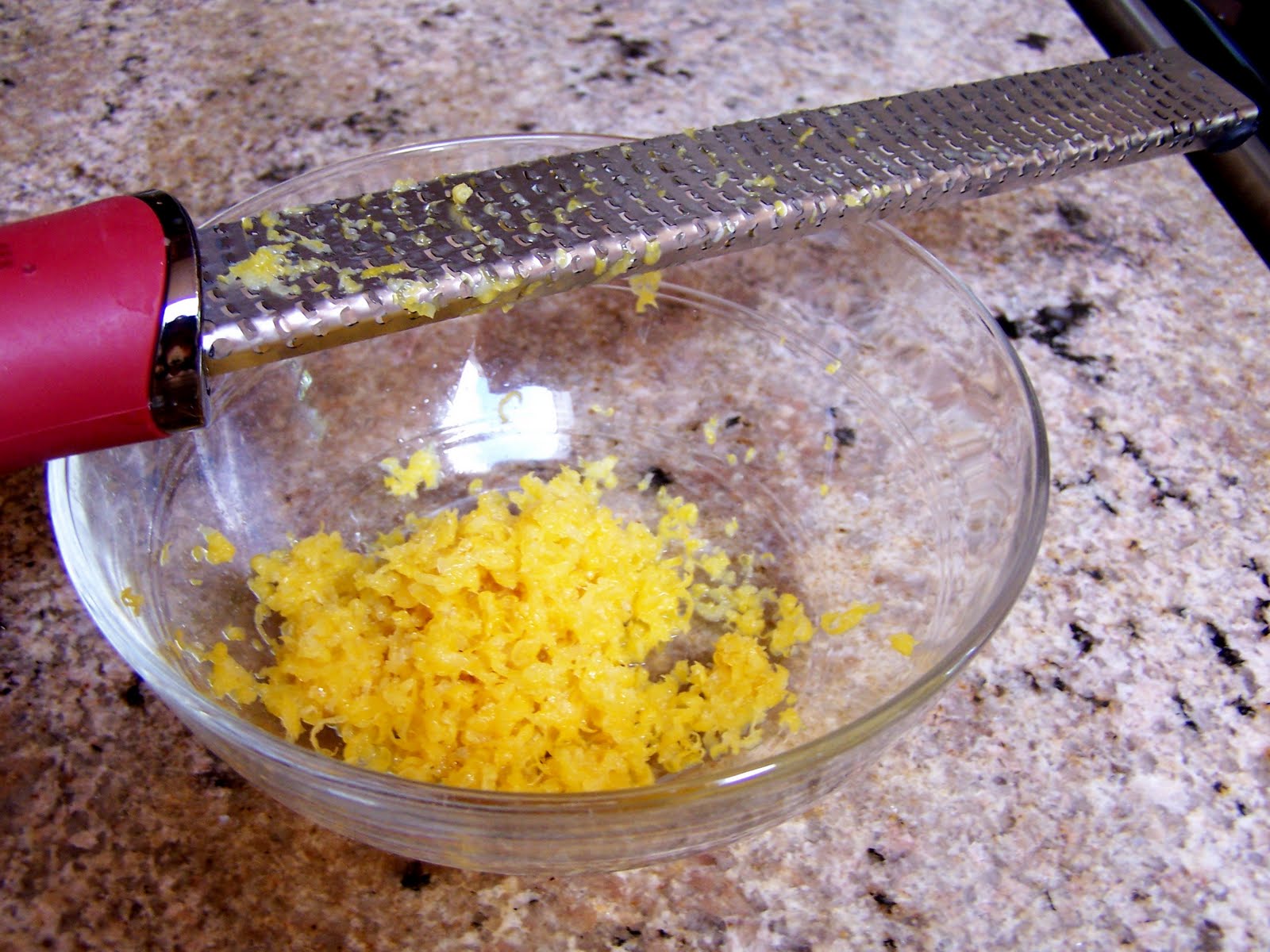
I like to use a fine greater to zest lemons. It is quick, efficient, and it gives small pieces so you do not end up with long, stringy pieces of zest.

Another tool I really enjoy and use often is this lemon juicer. It seriously gets all of the juice out without pulp. I still like it, even after I shot lemon juice into my eye the last time I used it (I might as well have wrung out the lemon into my eye I got so much in there).

The base of the batter is much like cookies, butter and sugar.
I don’t know what it is, but every time I try to shake in flour and add liquid at the same time (in order to incorporate together in equal parts or to alternate liquid and dry like the recipe calls for) I spill it all over the counter. After getting flour everywhere, I decided to use a 1 cup measurer to put it in. Much smarter and cleaner.
Once I had finished the dough and I was all set to “fold in” the whites, I realized I really didn’t know what I was doing. I know that not folding them in right can ruin the air in the whites and make the cake too dense instead of light and airy. I had seen my mom do it a few times before, but I was never paying attention well enough to replicate on my own. It was especially challenging with this recipe because the batter is ridiculously thick and heavy. I am a lifeguard, I swim, I lift weights, I’m not a pathetic, out of shape person… but my arm hurt after “folding” these in because of the weight of the batter. I guess my version of trying to fold worked out well though, because my cupcakes were light and fluffy.
I used a 1/4 cup scooper to measure out the dough into the regular size cupcake pans and a smaller one to fill the mini-cupcakes. Without the scoop I always fill the tins too much or too little and my cupcakes end up being completely messed up.
Here are my mini-cupcakes all set to bake. I did a bit more than half a sheet of these and 12 regular cupcakes.
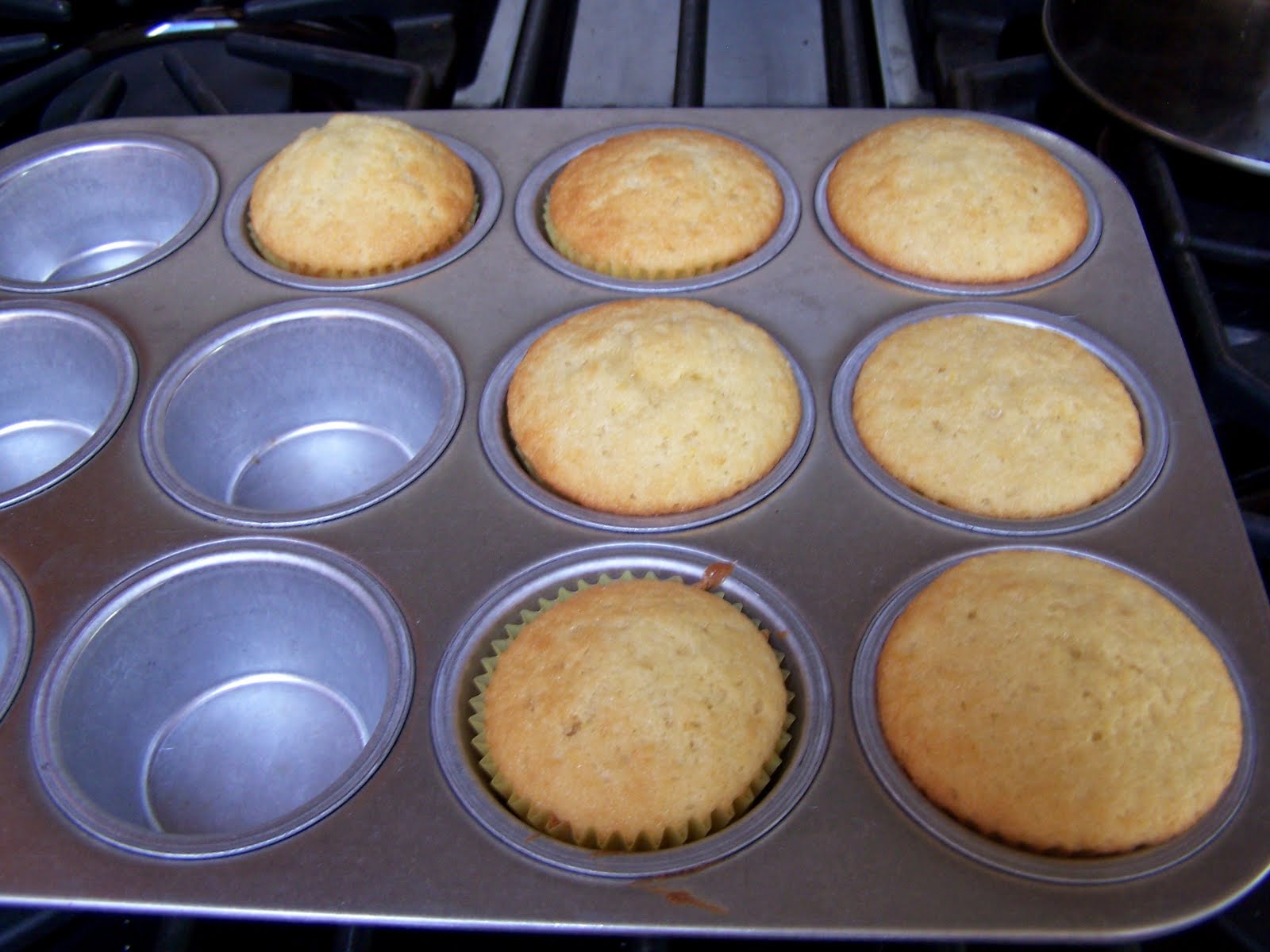
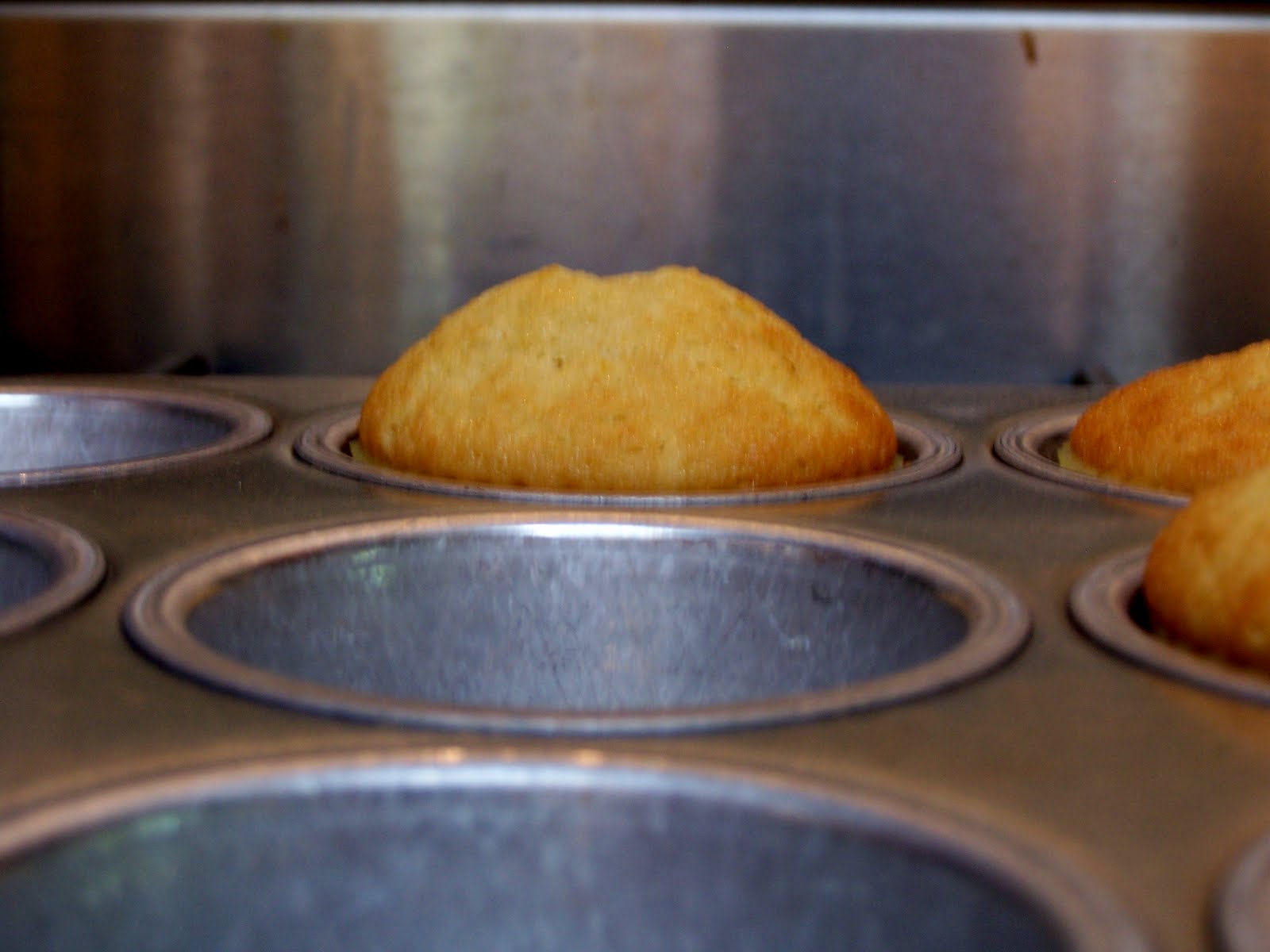
These rose much higher than I expected. Next time I will fill the tins only half way instead of three quarters to change the excessive round tops.

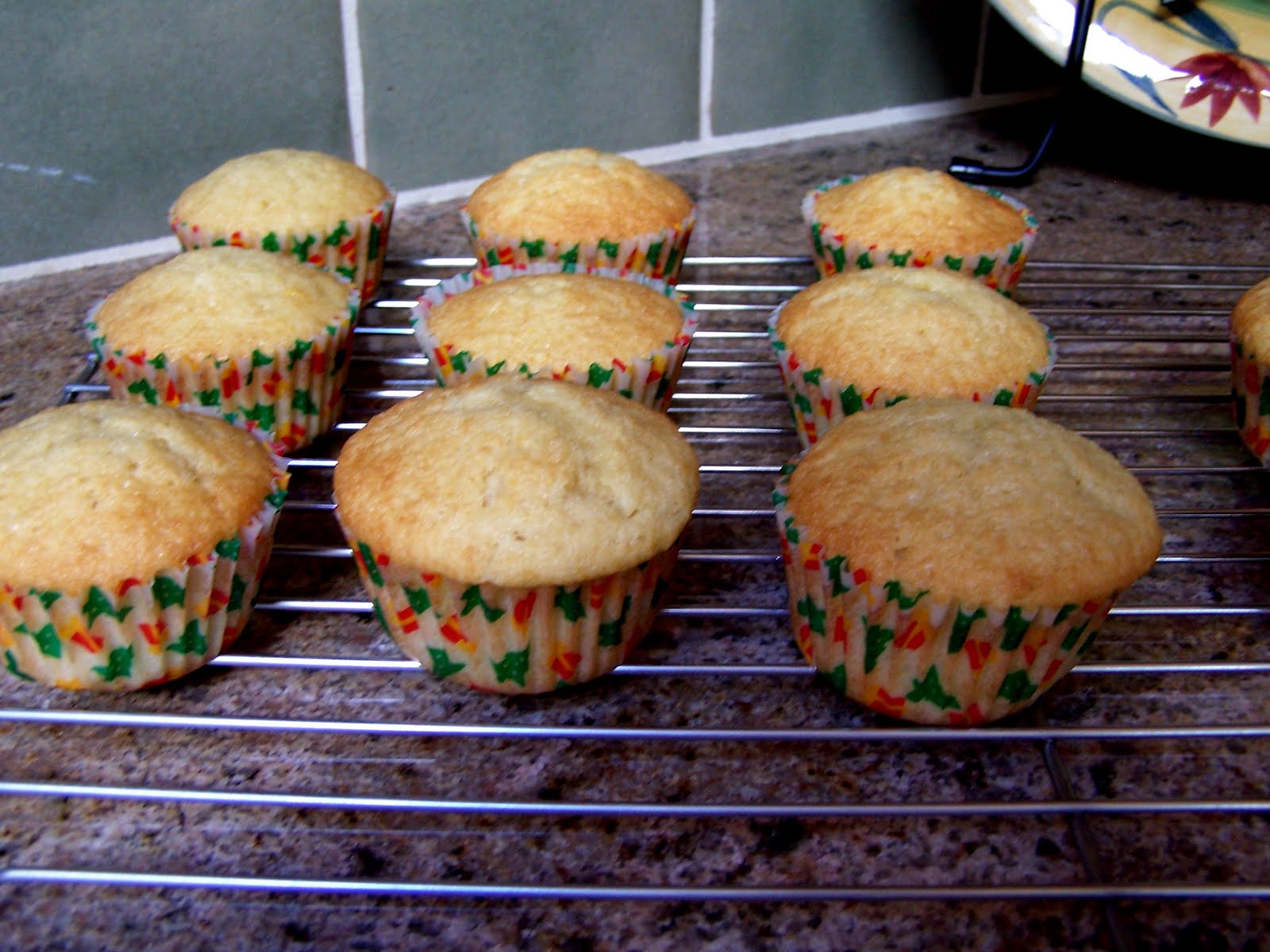
I couldn’t wait for them to be frosted, but they sure were delicious. I hope our new neighbors enjoyed them as much as I did.


Living sustainably on a budget: Canning jars as glasses

For the next school year I will be living in a University owned townhouse. This is a first for SCU, and the new student housing will be finished with construction in August. Needless to say I am excited to move in.

However, for the first time I will have a kitchen. Because I am the one the most interested in cooking/baking, and I want to be able to start building a sustainable kitchen that will last me well into my future, I have taken over the responsibility of our entire kitchen. This means I am in charge of all cooking utensils, plates, forks, drying racks, dish towels, ect. The list feels endless.

What is most important to me is that I buy items that will last me years after I graduate. I want the shopping I do now to not just be on plastic junk that I will throw out when I graduate. This poses a bit of a challenge, however, because I am trying to buy quality items that will last. There are some costs that are unavoidable (my amazing mixer that will last me more than 20 years (based on how long my parents has lasted, and I have the updated model of theirs : ) ). And yet there are also some items that extremely cheap can also be sustainable and beautiful.

I have been thinking about what to do about drinking glasses for a few weeks now. My main concerns were durability, quality, quantity, and of course, price. My roommates and I are not the kind of college students that will be throwing major ragers in our condo next year (many of us do not even drink), but I am expecting us to accidentally knock things over and drop things. I am a complete klutz on my own, so adding in the fact that there will be six of us living in a relatively small space, I am expecting us to break some things.

My solution to all of my concerns: canning jars. They are durable, super duper cheap- each jar is about $1. For 12 “glasses” I paid a little over $12. This is perfect because if we ever have guests over, we can easily feed everyone without having to use plastic or throw away. They are easily replaceable, washable, and easy to drink out of. If we break them we can cheaply and easily replace them. They are also beautiful and add a little personality to our kitchen.

Another bonus is their potential for sustainability. After I graduate if I no longer want to use them as drinking glasses I can use them for canning, vases, food storage, and many other things.

These are cheap, easy, readily available, and a perfect solution for anyone who is trying to supply a kitchen on a budget. You can find them at any grocery store as well as large chains that try to sell a bit of everything (I hate giving any suggestions to go to these places, but for clarity I mean places like Target. I just try to encourage people to support their local business owners before huge chains with questionable ethics and environmental standards… thats a whole other story…). In the next few weeks I will be off to some used stores to see what other quality items I can score for our kitchen. Check back soon.

FDA sets sights on regulating sunscreen

I know it’s odd that I am so passionate about sunscreen, but it is something that is important to me for many reasons. The first is that I have grown up with a mom who used to slather us in sunscreen before we went outside. I will be thankful to her in 20 years when I’m not covered in wrinkles or skin cancer (even though as a kid it used to drive me crazy! The 5 minutes it took was an eternity in kid time).

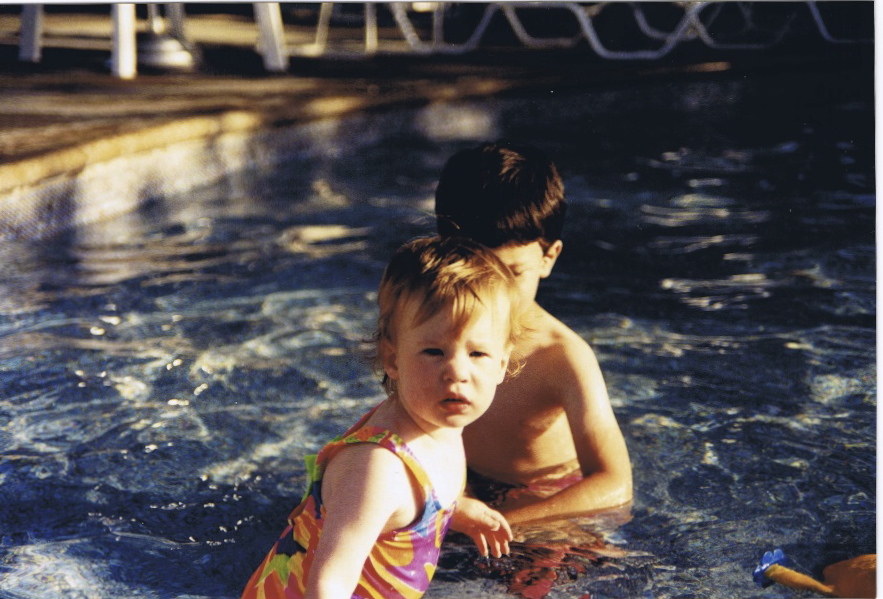
 My brother and I all slathered in sunscreen.
Here is the perfect proof of my mom’s sunscreen applications. At first glance it looks like my mom put zinc on me… technically true… but it’s some sort of white diaper rash cream… Whatever works I guess. I never got burned with it on, and it stayed on pretty well in the pool. I am also wearing a shirt that I will be swimming in in a matter of seconds after I sit through this photo.
I also burn very easily, even when I slather on the sunscreen. The third reason is that I have spent the last five summers of my life in the sun every single day as a lifeguard. I worry that even though I think I’m protecting myself, the sunscreen I put on is really letting me down, and I will not know until I develop skin cancer years later.

Thats why this morning when I read the New York Times article “F.D.A Unveils New Rules About Sunscreen Claims” which said that the FDA is setting new rules for sunscreens, including making them protect equally against both UVB and UVA rays, I couldn’t wait to share it:

“After 33 years of consideration, the Food and Drug Administration took steps on Tuesday to sort out the confusing world of sunscreens, with new rules that specify which lotions provide the best protection against the sun and ending claims that they are truly waterproof.

The F.D.A. said sunscreens must protect equally against two kinds of the sun’s radiation, UVB and UVA, to earn the coveted designation of offering “broad spectrum” protection. UVB rays cause burning; UVA rays cause wrinkling; and both cause cancer.

The rules, which go into effect in a year, will also ban sunscreen manufacturers from claiming their products are waterproof or sweatproof because such claims are false. Instead, they will be allowed to claim in minutes the amount of time in which the product is water resistant, depending upon test results.

And only sunscreens that have a sun protection factor, or SPF, of 15 or higher will be allowed to maintain that they help prevent sunburn and reduce the risks of skin cancer and early skin aging.”

The article also says that the FDA has not decided if it will stand up against companies claiming “SPF numbers of 70, 80 and 100 even though such lotions offer little more protection than those with an SPF of 50.” Because more people are more aware of skin damage and the need to protect our skin, many sunscreen companies have been playing off of our fear and selling us products that promise us the world, but do not actually offer us much.

The article also states that many researchers have not found a value in an SPF over 50:

““Right now, we don’t have any data to show that anything above 50 adds any value for anybody,” Dr. Woodcock said.

Dr. Warwick L. Morison, a professor of dermatology at Johns Hopkins University and chairman of the photobiology committee for the Skin Cancer Foundation, said he was disappointed that the F.D.A. failed to ban SPF numbers higher than 50 because such products expose people to more irritating sunscreen ingredients without meaningful added protection.

“It’s pointless,” Dr. Morison said.

More than two million people in the United States are treated each year for the two most common types of skin cancer, basal cell and squamous cell, and more than 68,000 receive a diagnosis of melanoma, the most deadly form of the disease. Sunscreens have not been shown to prevent the first case of basal cell carcinoma, but they delay reoccurrences of basal cell and have been shown to prevent squamous cell and melanoma.”
One of the things that slightly disappoints me is that it seems like the argument is about semantics rather than doing full scale research on whether or not properly using sunscreen is protecting us. Or if the chemicals used in it are only making things worse. My hope, however, is that some of these arguments, even if they are just about word choice, will help people better chose their sun protection and better understand what a sunscreen actually does- extend the amount of time you can be in the sun without experiencing a sunburn instead of just expecting it to be a “screen” or an impermeable protection.
Even though the rules aren’t perfect yet, I’m still excited about them! It is definite progress from the 30 years of silence from the FDA on the issue. I cannot wait to see how these will affect next year’s sunscreen companies summer battle to claim they are better than every other company. I am also interested in seeing how these rules will guide consumers on how to best protect themselves.
Even with the new regulations on the way, if you see me outside (sun or fog for those of us who live on the coast : ) ) I will be the one in the hat and the lightweight long sleeve shirt wearing my best human and environment friendly sunscreen.

DIY Jewelry Holder

I have to admit, I am not very creative when it comes to creating things or decorating. I have been itching for something to organize my jewelry, but I did not really know how. I almost gave away one of my bulletin boards that I have had since I was a kid when I realized it had potential to be something better. My DIM (Do It Myself) project this weekend was to turn this hideous piece into something functional and beautiful.

For some reason in 7th grade I decided it would be a brilliant idea to use elmers glue to paste pieces of tissue paper on the cork of my bulletin board. When I decided I no longer liked the paper and tore it off, this is the ugliness that I was left with.
To begin transforming my nightmare of a bulletin board into a visually interesting and fun jewelry holder, I sanded down all of the wood until there was no longer a sheen to it.
When I was finished I cleaned it off well and added my first coat of paint. Because I planned on covering the cork, I painted over onto it. Also something important to note is that I painted the part of the wood frame in the very back. The reason I did this is because in my room at home and in my dorm room next year I plan on leaning it against the wall. If I hadn’t painted the wood on the back it would be visible and ugly when resting against the wall.
When I was buying the low VOC paint (a must for any project involving paint. It can be found at most local home improvement stores) I decided to just use a disposable foam brush to prevent ruining one of my dad’s nice paint brushes (I have done it before and I still feel horrible). However, the foam brush looked absolutely terrible. I ended up using a nice brush that can be washed and reused for years, which is much more sustainable as well.
My board also needed two coats before it was well covered and there were not any streaks or blotches.
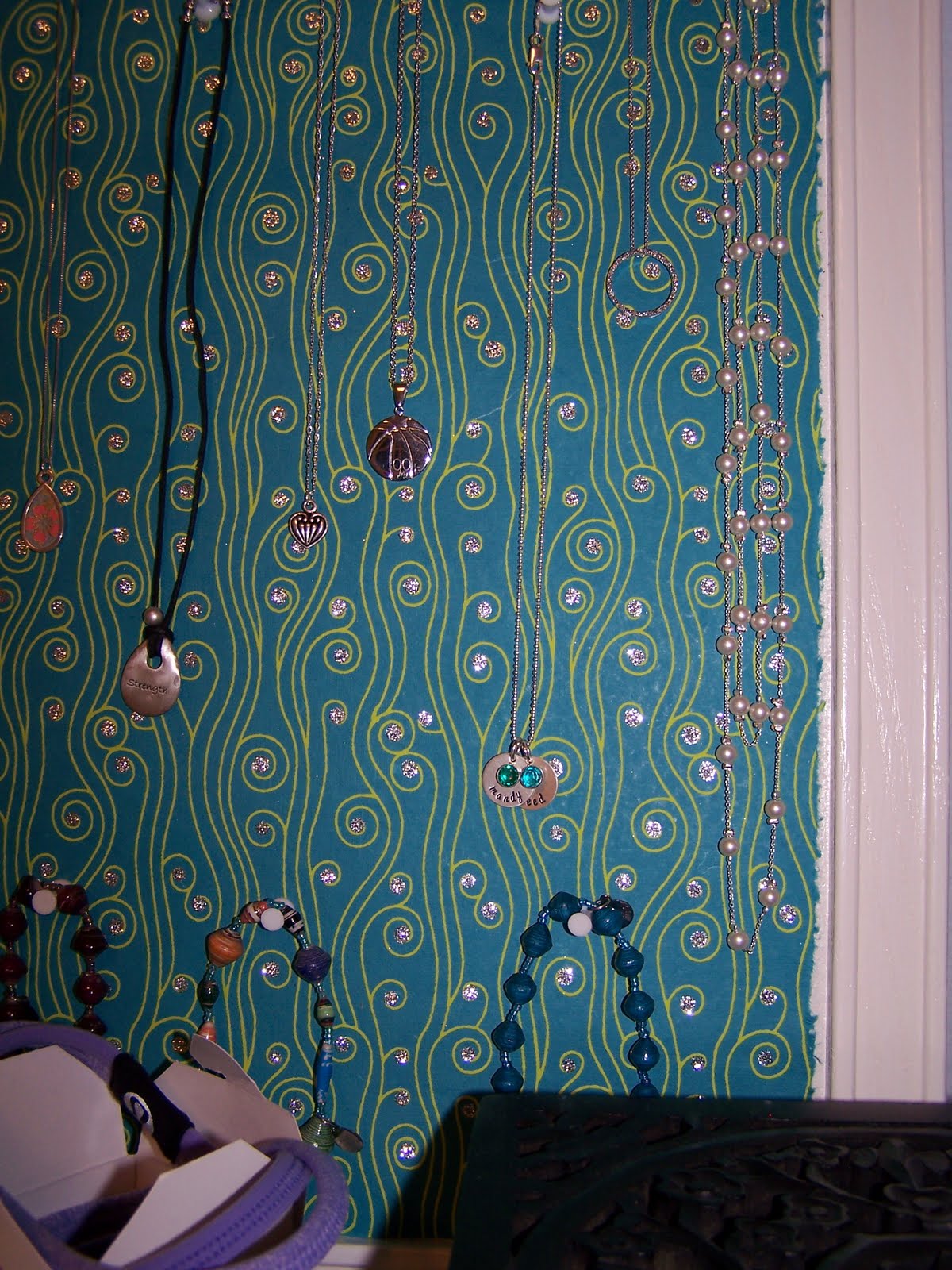
I covered it with a piece of really nice wrapping paper (I really hate the sparkle on it, but it was the best I could find in that quality) to cover the cork and make it more like art.

I simply used white push pins that I already had lying around my room to hold everything up.

What I love the most about this project (besides that fact it took me 1 hour of work and 4 hours of drying to create) is that I took something that I though was hideous and beyond help and turned it into something better. It has given me a whole new perspective on “ugly” furniture. From now on I will consider what I could do (or have someone help me do) to something before I decide it’s ugly and not useable. I will also see what I have lying around that I can turn into something I need before buying it.

Under the Rug: My e-waste documentary

It took us four weeks and countless hours editing to make our short e-waste documentary. I hope you enjoy it.

Special thanks to Pearl and Misa for making our project everything we hoped it would be.

Electronic waste recycling: How it’s really done

About three weeks ago I visited an e-waste recycling facility for a documentary I was making with two other girls for a class (I will post it soon : ) ). Before going I thought e-waste was recycled by having people disassemble each item by hand, pulling out all of the important materials, and separating them all meticulously. Oh how naïve I was.

In reality, my imagined method of e-waste would have us completely buried in mounds of it. It would take forever for workers to break down each and every item. However, it would be significantly more efficient at material recovery. So what really happens with e-waste? Just saying this makes me shudder: it goes through a shredder.

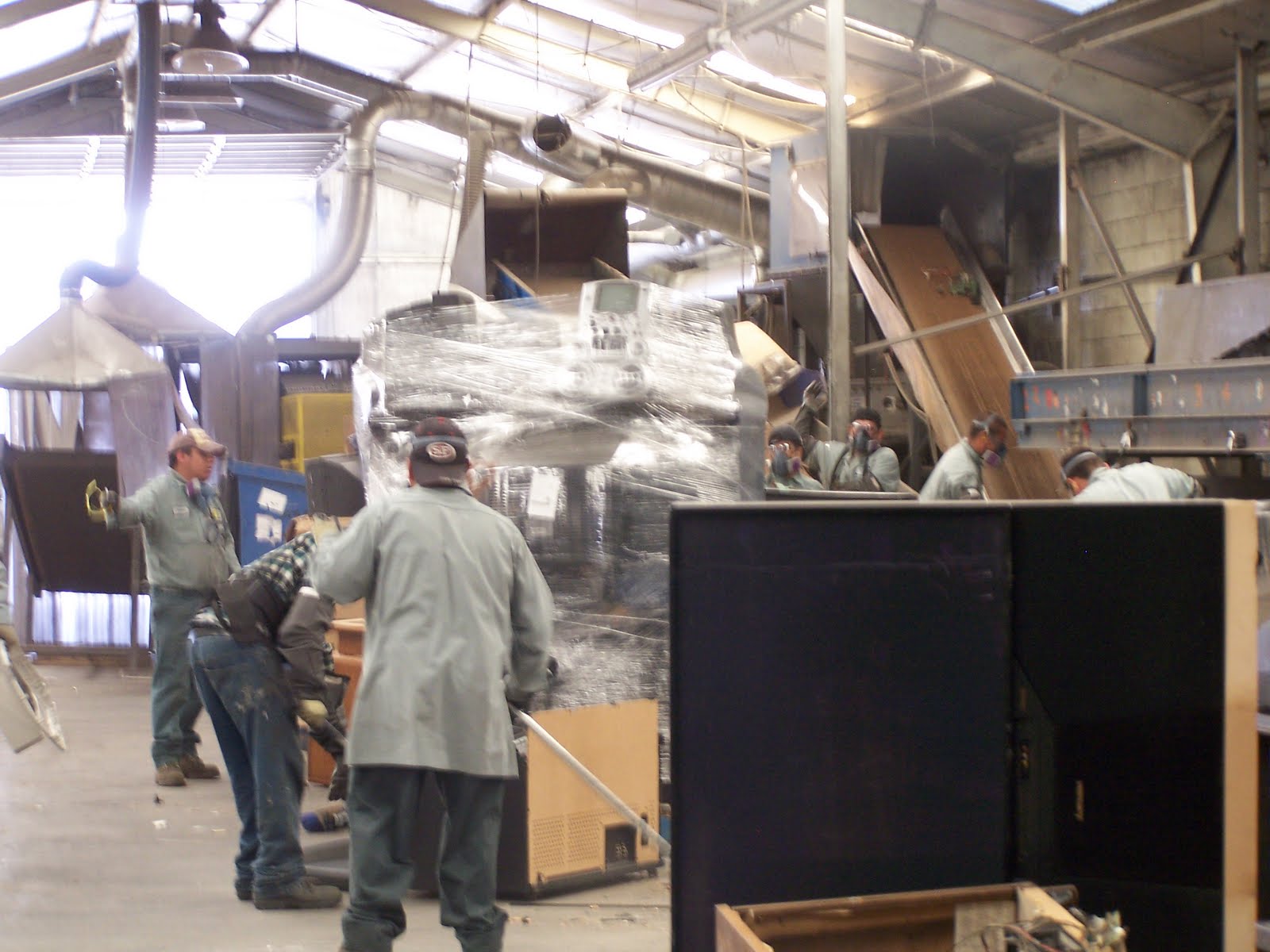
First they dump out the e-waste by using a forklift and tipping over a full metal bin. They sort through it a bit to remove all long cords that can get stuck in the shredder (I saw them take out Christmas lights and some other long, unattached cords). They also take out glass that can be easily removed (the plate in the microwave and the glass in scanners).
They toss it onto the conveyer belt that takes into the belly of the shredder.
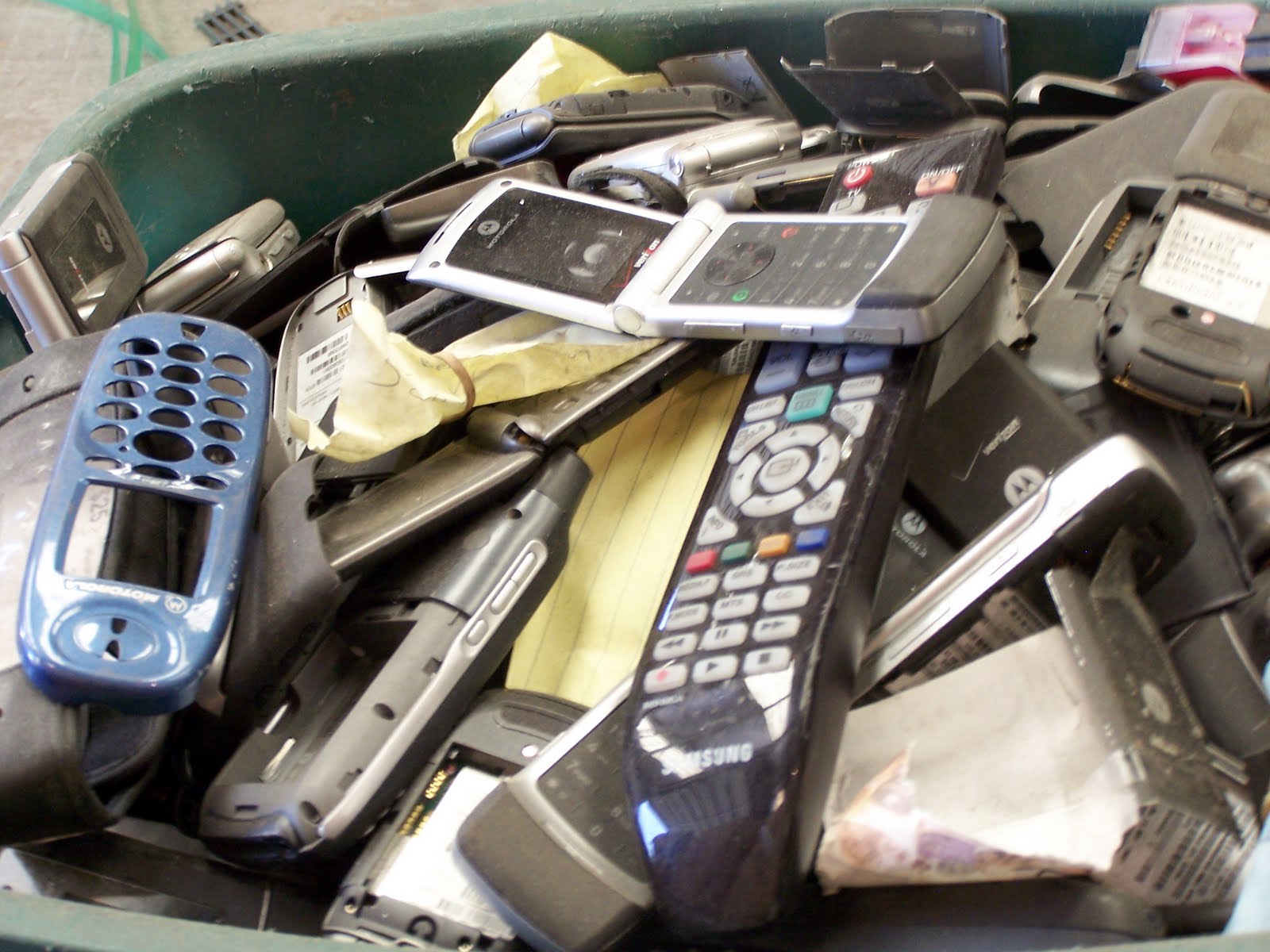
I included this image because I think people do not really think about what really constitutes e-waste. I think most people only consider TV’s and computers. But really, e-waste is any item that runs on electricity, either through a batter or a cord. This mean that alarm clocks, watches, refrigerators, electric stoves and other appliances, video games, ect. are all e-waste. I cannot even begin to imaging how many of these items as a country we all have. It’s just too much.
The main part of the shredder where it is broken down into small pieces was just a big large blue square in the center of the room. I tried to get pictures of it, but it was blocked by large pallets and other things that have been through the shedder. The entire machine takes up a huge warehouse.
Afterwards the materials go through shakers, which sort the materials by weight. This is intended to separate the different kinds of metals and plastics. It is inefficient, however, and all different kinds of materials end up in these large boxes that may, for the most part, be one material. These boxes are then packaged and shipped to other countries (in this case they only told us about shipping to Texas and a company in Canada) who will reuse the items and make them into something new. The metals are typically melted down and refined before being molded into a new product, while the plastic is compressed or shredded down further before being down-graded. What is down-grading? It’s when a product has to be used at a lower quality. In many cases recycled plastic cannot be recreated into things that hold liquids and instead are made into clothing or other items.

Although the majority of the e-waste does go through this shredder, anything with a cathode ray tube (CRT) are recycled by hand (including older TVs and computer monitors). Computer towers and laptops are also recycled by hand because the parts in them are more valuable when sent off individually (all of the circuit boards, cd drives, fans, ect. are piled together and sent to different companies for different purposes, but unless they are still in excellent working conditions, they will be melted down and turned into something else).

The plastic is then sorted by color: white, black, and colored. What you see in the picture above is their colored pile. This is done so it is easier to recycle into something new and the colors are homogenous.
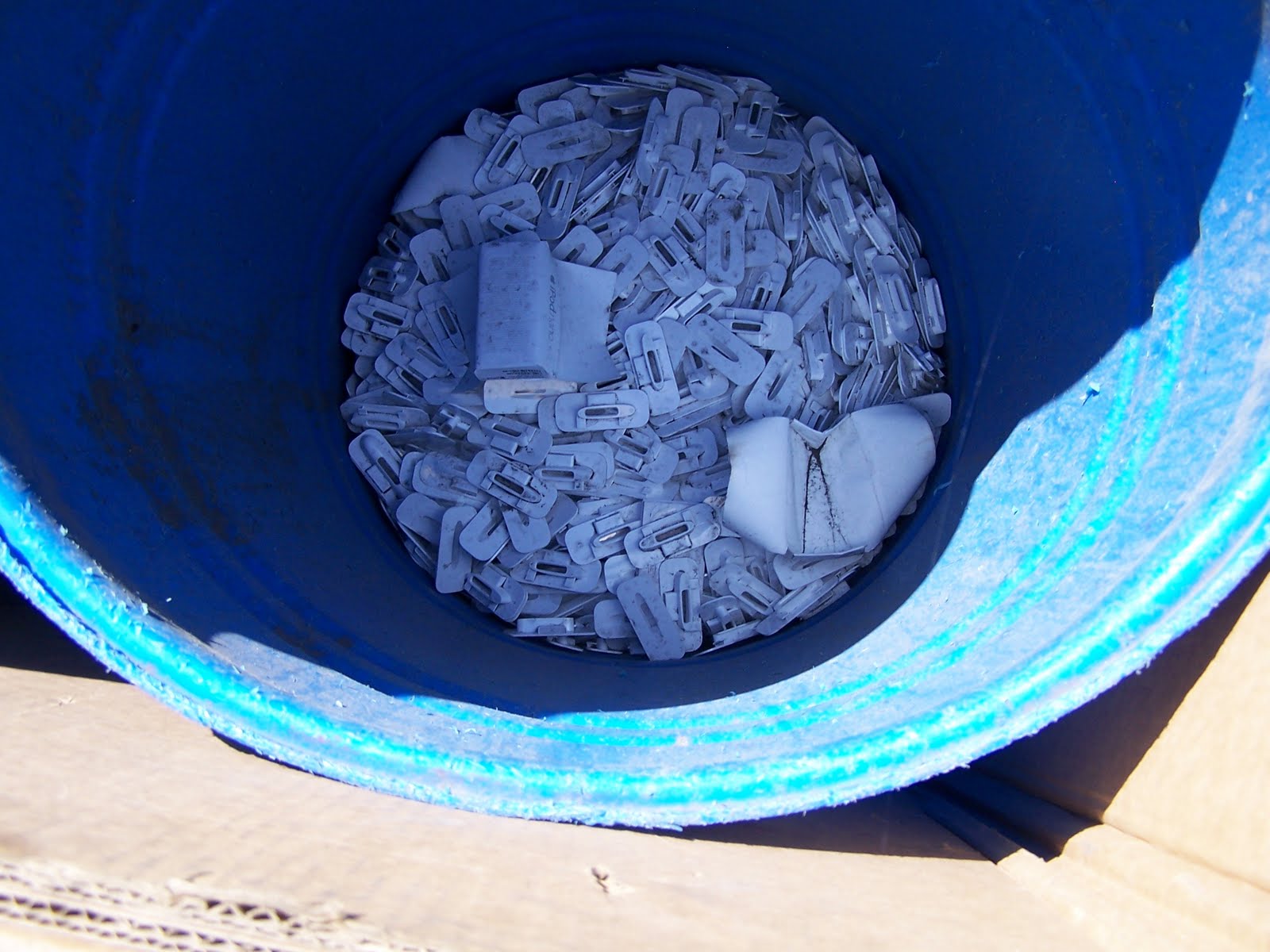
This picture, and the one below, are a quick reminder of all of the things we use every day without considering where they go. The picture below is a container full of the plastic pieces that come with every hand held apple product for docking. I can’t even imagine how many of these things are created every year.

I also never thought about all of the DVDs, CDs, and other storage devices.
 Hopefully this makes recycling more clear and it helps everyone to understand why it is so important to keep our products as long as possible and to make sure they last. Even though it’s good to recycle, its even better to use less electric products, and to use them until they are absolutely non-functional anymore.

For more information about responsible recycling near you check this out.

Thank you to ESC Refining for allowing my group to film part of our documentary as well as to answering all of our questions.