Treading Lightly
Treading Lightly

Homemade Iced Tea

I have a tea obsession. I usually keep it well hidden, but anyone who visits me knows the truth. This past year in my dorm room I had an entire drawer devoted to tea… and that was not even all of the teas I own. I love all teas — black, red, white, and herbal alike. The tea I drink depends on the day and my mood. The problem is that as the weather warms up, drinking warm tea can be slightly irritating. At school and other places I have bought iced tea, but it seems to always come with excess packaging and it’s either too sweet or not sweet enough. Now that I have learned how to make iced tea I can have the exact flavor and sweetness that I want when I want it… It’s a beautiful thing.

Ingredients:
6 (or as many as you want to make) cups of water
6 tea bags (1 bag for each cup of water if you are making more than 6 cups)
sugar to taste (for me it was about 7-8 tea spoons (6 of the “teaspoon” we have in our sugar bowl. I like one per cup of tea))

1. Measure out your water with a little extra to allow some to boil off

2. Pour into a medium sized saucepan and wait until it boils

3. Turn off the heat and add your teabags (1 per cup of water)

I don’t know why, but I love fruity iced teas. I decided to do a herbal peach because earlier this week I made a black peach tea.
4. Once the tea has seeped for the time called for on the box/tin (typically between 3-6 minutes) remove all of the tea bags
5. Sweeten to taste (or not at all) while it is still hot so the sugar melts and mixes in well.
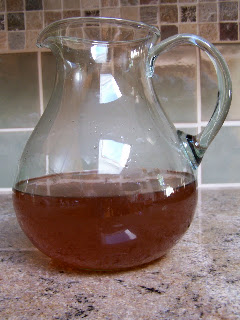
6. When it is all done I pour it into a pitcher. When I travel with my iced tea I use my beautiful glass LifeFactory bottle because it is dishwasher safe (and thus super easy to get completely clean before pouring in my next tea). You can also store the tea in individual bottles, jars, ect.

Gorgeously Green

One of my favorite things about summer is all of the time I have to read. During the school year I do not have time (or the brain power) to read “fun books” (basically anything a teacher did not assign to me).  Two of my favorite do it yourself sustainability/environmental books are Sophia Uliano’s Gorgeously Green and Do It Gorgeously.

Photo courtesy of Outblush
Photo courtesy of Veganconsultant
Even if you do not like to read, these books have great recipes for homemade cleaners, personal care products, and food. It also gives advice for chemicals to avoid and suggestions for other sustainable practices. For those who do like to read, these are quick and interesting. My family bought them used from amazon.com, and we use them as references for recipes and other tips.

Best eco-friendly sunscreens: All Terrain TerraSport

The irony does not escape me that I am writing this on the first day of rain this summer. It seems that winter was worried we might have forgotten about it and came to visit. At my home in the Bay Area it is pouring today like it was any other day in February or March. I love the rain, and yet I am not really looking forward to working in it all day today. Oh well, at least I got a free car wash and I shouldn’t have to worry nearly as much today about getting a sunburn : )

After my sunburns and freckles from a few weeks ago I immediately went out and bought new sunscreen to replace my year old tubes. I could not find one of the brands I wanted, and instead decided to try something new that I had read a bit about online. Within the first day I had completely fallen in love with it. Although the one I bought is not waterproof (I am waiting for a local store to restock before I can test out their water-resistant version), All Terrain’s TerraSport is incredible.

Image courtesy of Health Designs
The sunscreen goes on easily and soaks in quickly. I have not had to worry about weird discoloration from the sunblock (typically making your skin look blue and like you are some creature out of a Stephenie Meyer’s novel). It does not leave your skin oily or sticky, and hours later when my shift is over I do not feel like I have layers and layers of sunblock on.
The sunscreen works great when you are out in the sun, but not getting in the water. I have been splashed, and I used on it some really hot days where even after sweating it was still on and working.Environmental Working Group Rating: 2
SPF: 30

Four ingredient shortbread cookies

My friend Lauren and I also made these cookies because they are easy to customize to your taste. I love filling them with jam, but you can also add a simple icing or chocolate drizzle or coat. A real bonus of this recipe is how easy it is. It only takes four ingredients to make the dough, and yet you can create multiple types of cookies with it. During the holidays my mom chops up dried fruit and puts it into half of the dough. She finishes those cookies with a simple icing. You can also make them out of whole wheat flour and they taste just as good.

Ingredients:
3/4 pound butter (salted or unsalted) at room temperature
1 cup granulated sugar
1 teaspoon pure vanilla extract
3 and 1/2 cups all purpose flour
optional: fruit jam or preserve, chocolate, powdered sugar (depending on how you wish to finish them once they are baked)


Recipe from The Barefoot Contessa, by Ina Garten- “Linzer Cookies”

1. Preheat the oven
2. In an electric mixer with a paddle attachment, mix together butter and sugar
3. Add the vanilla
4. Add flour and salt
5. Mix the dough until it just begins to hold together. Pull it out of the mixer and shape it into a flat disk.
6. Put it in a container (or do whatever you wish to keep it air tight) and chill for at least 30 minutes. (If you do not chill the dough it will be next to impossible to cut it out.)
7. Roll out the dough about 1/4 inch thick and use cookie cutters for desired shapes
8. Place the cookies on the baking sheet into the fridge for at least 15 minutes. This stops the cookies from spreading out as much.
9. Bake for 20 to 25 minutes, or until the edges are golden brown.


Sorry about the really terrible pictures with these. I had smudged the lens and the lightening was weird when we finally finished all of our cookies. We baked for more than 3 hours. I don’t know about Lauren, but I think it was worth it.

My obsession with Food Inc.

Whenever my coworkers ask me if I think something is healthy (because of the “odd” things I eat they have deemed me some sort of health food manual) I get flash backs to Food Inc. The movie did not vastly change my life (I have been a vegetarian for more than 5 years mostly because meat freaks me out. To me its like chewing on your own arm… too weird and just not right. I have also been hyperaware of our food system in the United States), but it did make me more outspoken about the horrendous industry that controls the vast majority of what people eat.

Whether you think you know almost everything there is about our food system or you have no idea what “factory farming” means, Food Inc. is not only shocking and interesting, but also a documentary you will most likely never forget. (Do not fear the word documentary. I promise it is interesting to even those who hate “all documentaries” (I have tested this statement on friends and family).

Homemade laundry soap

My battle with laundry soap has been life long. I am allergic to most brands to the point where I would sometimes get rashes after putting on clean clothes. My mom would struggle to find a detergent that would not give me or her an allergic reaction, and it seemed like as soon as we found one it would be discontinued.

As we changed our household to being more environmentally friendly in every aspect, one of the first things to go was our laundry soap. All of the detergents, coloring, optical brighteners, bleach, and other chemicals are not only terrible for your clothing, but also for your health and your local environment. Wastewater treatment plants are unable to filter out all of the chemicals we put down our drains. These chemicals are pumped out with the grey water into our local environments.

In my hometown the grey water is pumped into the ocean. This means that all of the chemicals in our cleaning products, including laundry soap, are being directly pumped into local habitats where animals absorb them or eat foods laced with these materials. This is especially dangerous in areas near the ocean or lakes where the local wildlife bioaccumulates or carries these chemicals until we eat them and absorb them as well.

Instead of “cleaning” our clothes with a laundry list (pun intended) of chemicals, my family decided to start making our own soap. Although you can easily buy environmentally friendly soap, it is expensive, and often comes in wasteful, non-recyclable packaging. By making our own laundry soap we have ditched the dyes and other harmful chemicals. We also know exactly what is going in to it, its significantly cheaper, we are not allergic to it, and our clothes come out clean.

Homemade laundry soap ingredients:

1 (or more depending on how much you wish to make) bar Fels-Naptha or Ivory bar soap
Washing Soda
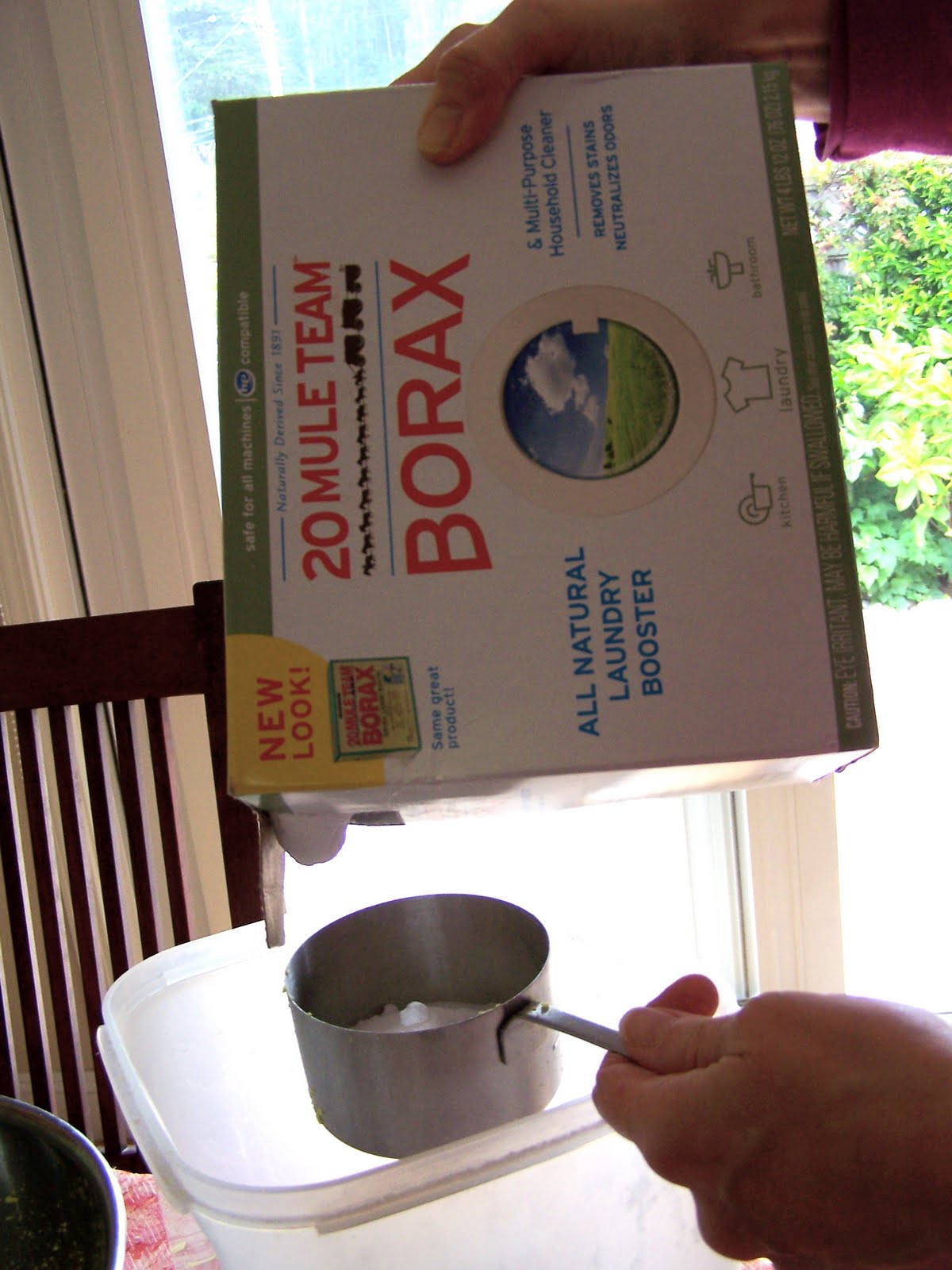
Borax

The recipe is incredibly simple:
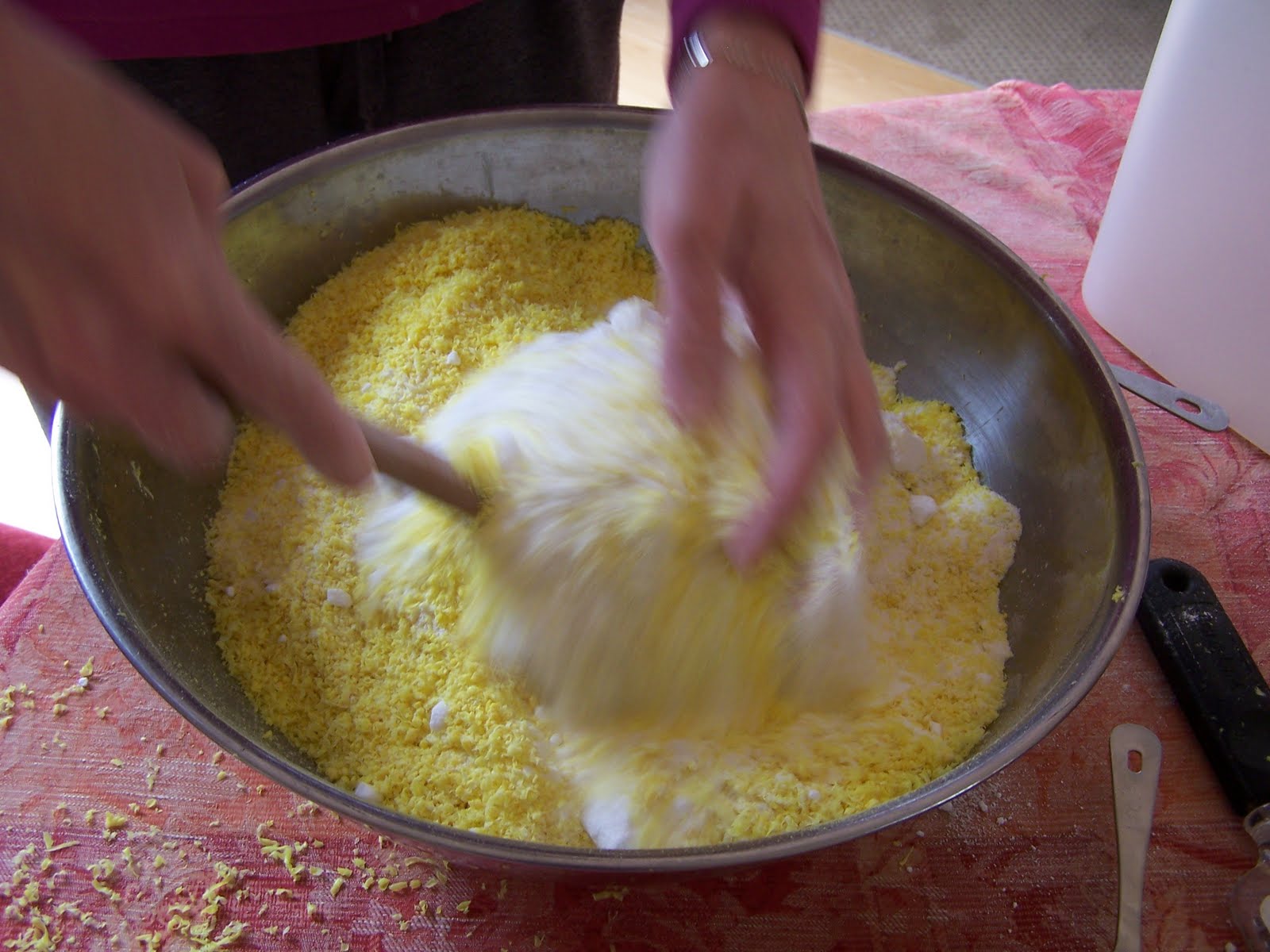
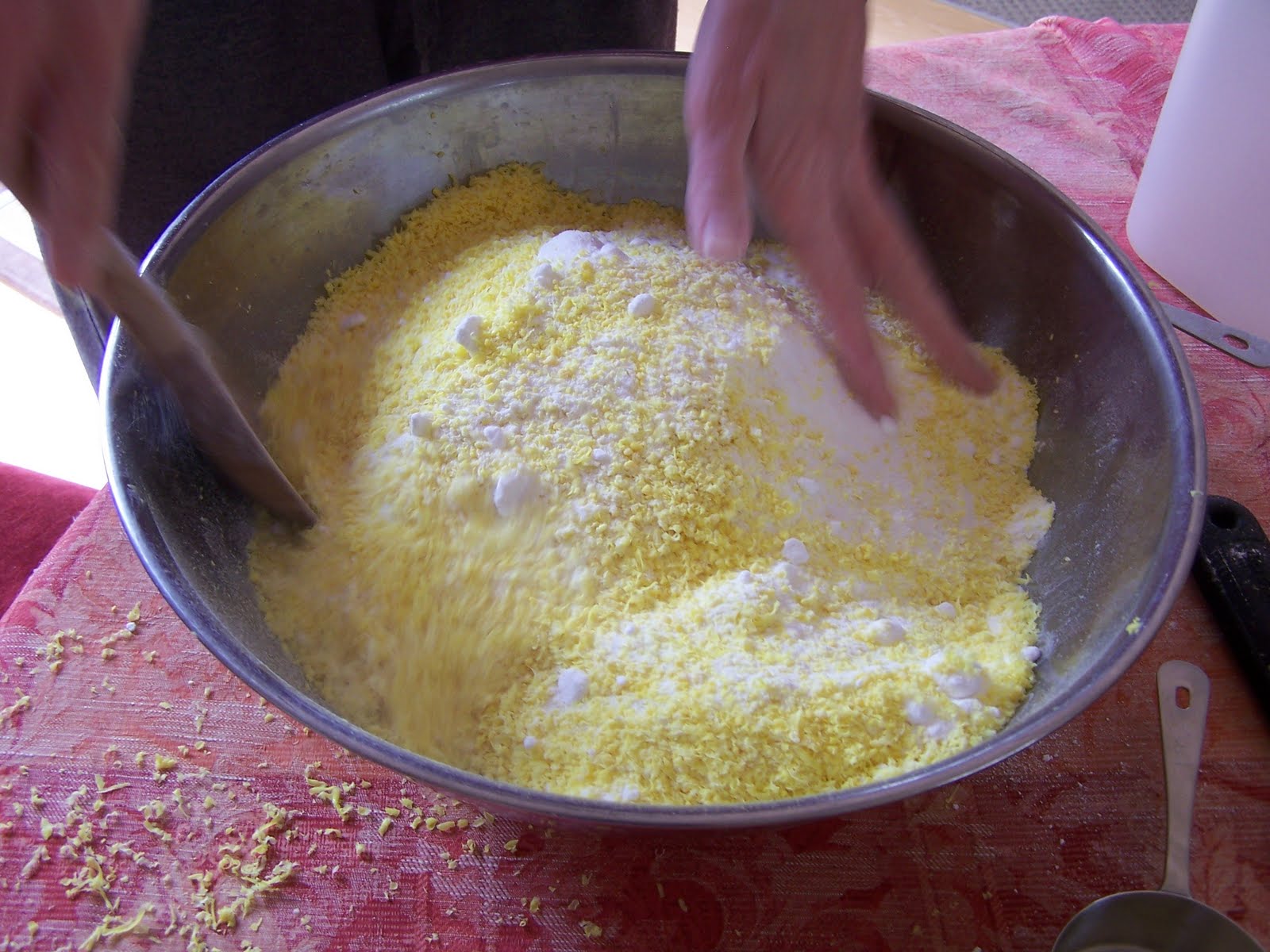
1. Grate the bar of soap (we used Fels-Naptha) with a fine cheese grater.

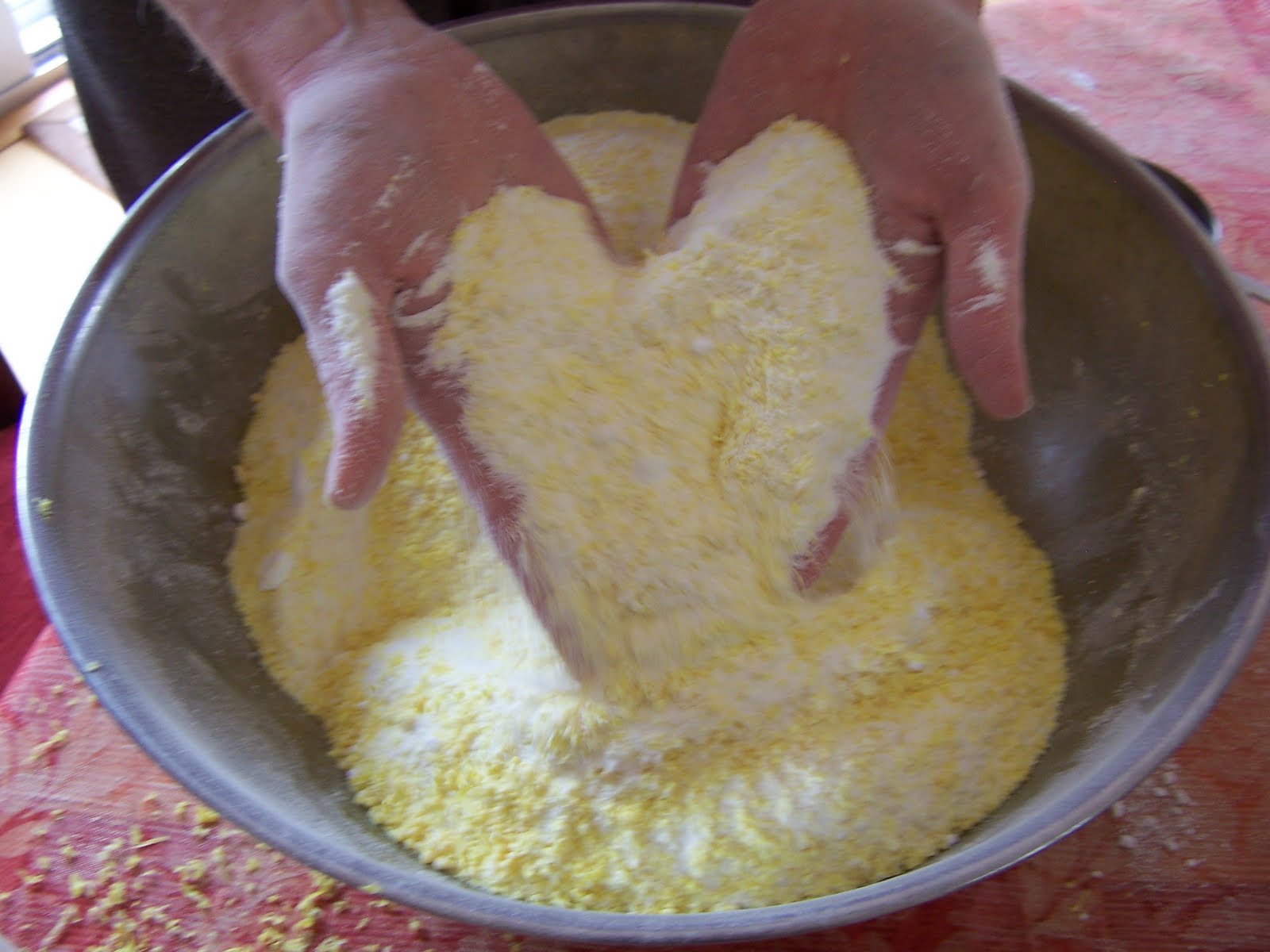
2. For every 1 cup of grated bar soap, add 1/2 cup of Washing Soda

3. and 1/2 cup Borax

4. Once you have measured mix it all together and pour into your container.
5. Use 1 tablespoon for front-loading washer, and 2 for top-loading. We use a medicine cup to measure.

One of the best things about this recipe is that you can choose how much soap you want to make. When I am at school I make a significantly smaller amount because of storage issues. At home we all pitch in to try to make as much as possible (your arms and hands get tired from grating the soap) so we do not have to do it again for a while.

To make six months worth of soap (for a front-loading, European washer with about six loads of laundry per week) it only takes about 30 minutes and less than $10. For us, six months worth is three bars of soap (about six cups) and three cups of Washing Soda and Borax each.
You can find the ingredients at local grocery and drugstores (we have found it at CVS, Safeway, Target, or local grocery stores).


Grocery shopping nightmare: The battle with packaging

Sometimes I feel like my largest tests of will (other than when I am making a dessert and I would rather keep eating it than finish baking it) is when I am grocery shopping. It’s not because I only want to buy items that are terrible for me or I am counting calories, but rather that every item I want (because most of our fruits and vegetables comes from a local delivery service or the farmers market) comes in endless amounts of packaging.

Normally I hate naming the places I am talking about, but this time for clarity I will. Stores like Trader Joe’s and Whole Foods irk me with their packaging. I love trail mix, crackers, and other snacks, and yet they all come in at least a plastic bag and sometimes even a box. The frozen food is in a plastic container, wrapped in plastic, in a cardboard box. Are they serious? There is no point to this piles and piles of packaging. As soon as the item is gone, or moved into a reusable container, the entire thing is meant to just be thrown out. We even put fresh fruits and vegetables in Styrofoam and then wrap it in plastic. Why are we paying to full our garbage cans and our already over flowing landfills?

When I am walking down the isles and I see something I would like to eat I always ask myself how much packaging it has, how much is recyclable, could I do without it? More often than not I walk away from some food item that I would enjoy because of the packaging. I am not willing to take home healthy food (or otherwise : ) ) that is going to send plastic to the landfill. However, it makes shopping for food so frustrating.

When I shop at Whole Foods I can get things in bulk with my canvas bags, but I worry about cleanliness, and sometimes the selection is not that great. I just wish packaging were better sourced, or not used at all. What if we all used reusable containers and brought in what we wanted? What if we didn’t double or triple package things? What if our food was not sealed in plastic? What if all stores didn’t package food?

Today GOOD highlighted a grocery store, In.gredients in Austin Texas that promises to be the nation’s first “package-free, zero waste grocery store.” According to the article:

“The idea is so simple, it’s surprising that no one in the United States has implemented it yet. (The United Kingdom, on the other hand, got the bulk food-only Unpackaged in London last year). Just like many people bring tote bags to the grocery store, shoppers at In.gredients will be encouraged to bring their own containers to pack up items like grains, oils, and dairy. If a shopper doesn’t have his own containers, the store will provide compostable ones. It’s as if the specialty bulk food section rebelled and took over the rest of a traditional grocery store. In.gredients will replace unhealthy, over-packaged junk with local, organic, and natural foods, and moonlight as a community center with cooking classes, gardening workshops, and art shows on the side.
“Truth be told, what’s normal in the grocery business isn’t healthy for consumers or the  environment,” In.gredients co-founder Christian Lane said in a press release. Americans add 570 million pounds of food packaging to their landfills each day, while pre-packaged foods force consumers to buy more than they need, stuffing their bellies and their trash bins: 27 percent of food brought into U.S. kitchens ends up getting tossed out.

I hope they get the funding they need to open and the support to stay open. I also hope we can get one close to my home in the Bay Area. While we wait there are some easy things you can do to cut down on the packaging you send to the landfill:

1. Avoid all of the isles that do not have fresh food. Focus on your fruits, vegetables, and freshly baked goods.

2. Shop at farmers markets and bring your own containers and totes. Give back any baskets or bags after putting your food into your own containers.

Image courtesy of Greener Greener
3. Shop at the bulk bins with canvas bags or jars. Just do not forget to keep one empty for the clerk to weigh.
Image courtesy of Eating Bird Food
Image courtesy of Super Stock
4. If you have to buy something packaged, buy the biggest package you can to reduce the amount of packaging you can.

Until one of these stores makes it near me, I will continue to battle the packaged foods and stalk the bulk bins for the trail mix with the perfect ratio of dried fruit to nuts and other tasty snacks.

Rich and light Zebra Cookies

My friend Lauren and I decided to make something simple, but fun for Father’s day. We decided to make chocolate zebra cookies that are rich and soft like brownies. These cookies are great because they are made in one saucepan, meaning there are few dishes to wash when you are done.
Ingredients:
4 ounces unsweetened chocolate, cut up
3 eggs, beaten
1 and 1/2 cups sugar
1/2 cup cooking oil
2 teaspoons baking powder
2 teaspoons vanilla
2 cups all purpose flour
Makes about 48 small cookies.
Before I get started I have to apologize for the smudge in all of the pictures. I apparently touched the lens with greasy fingers before we got started…
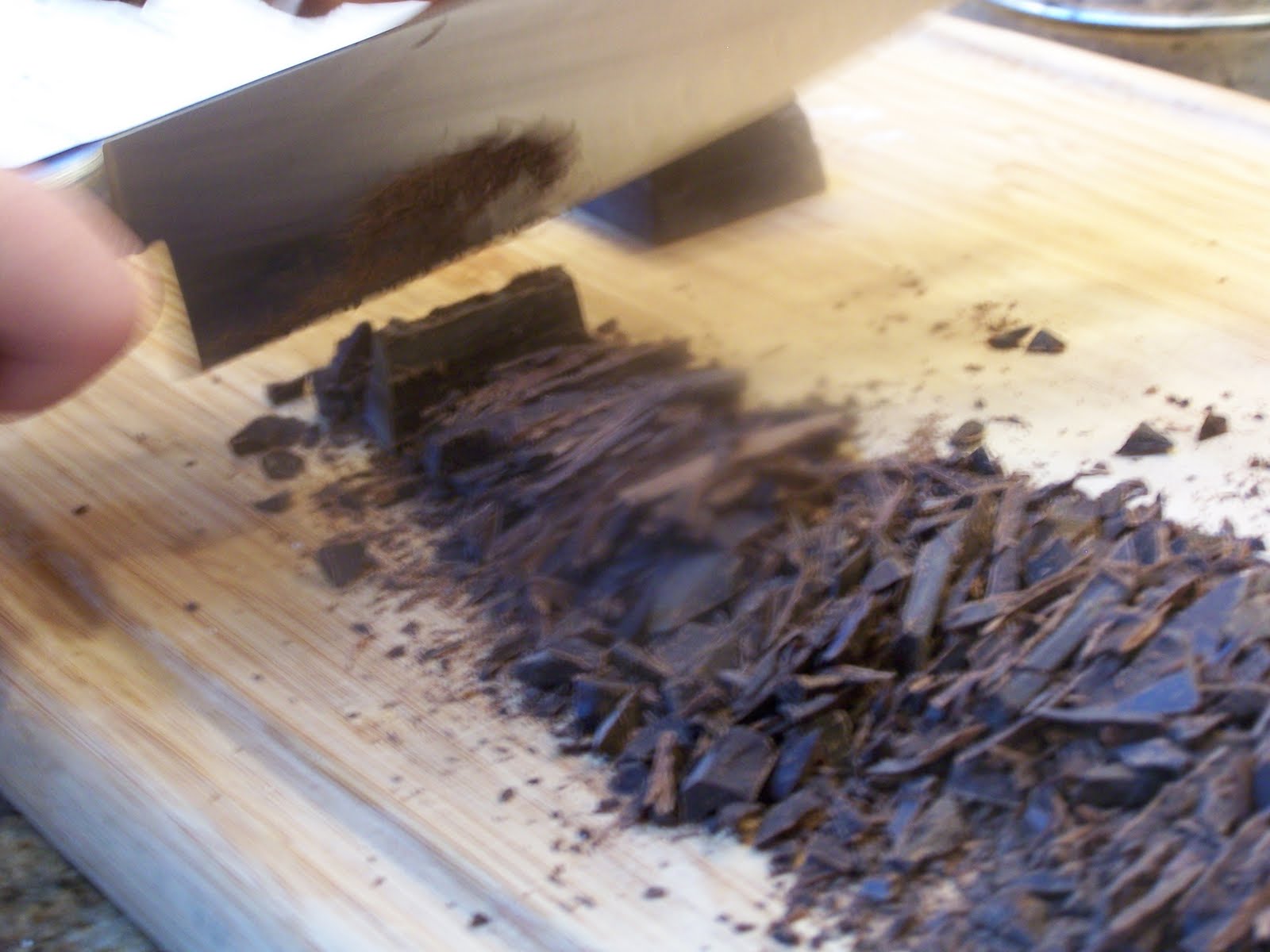
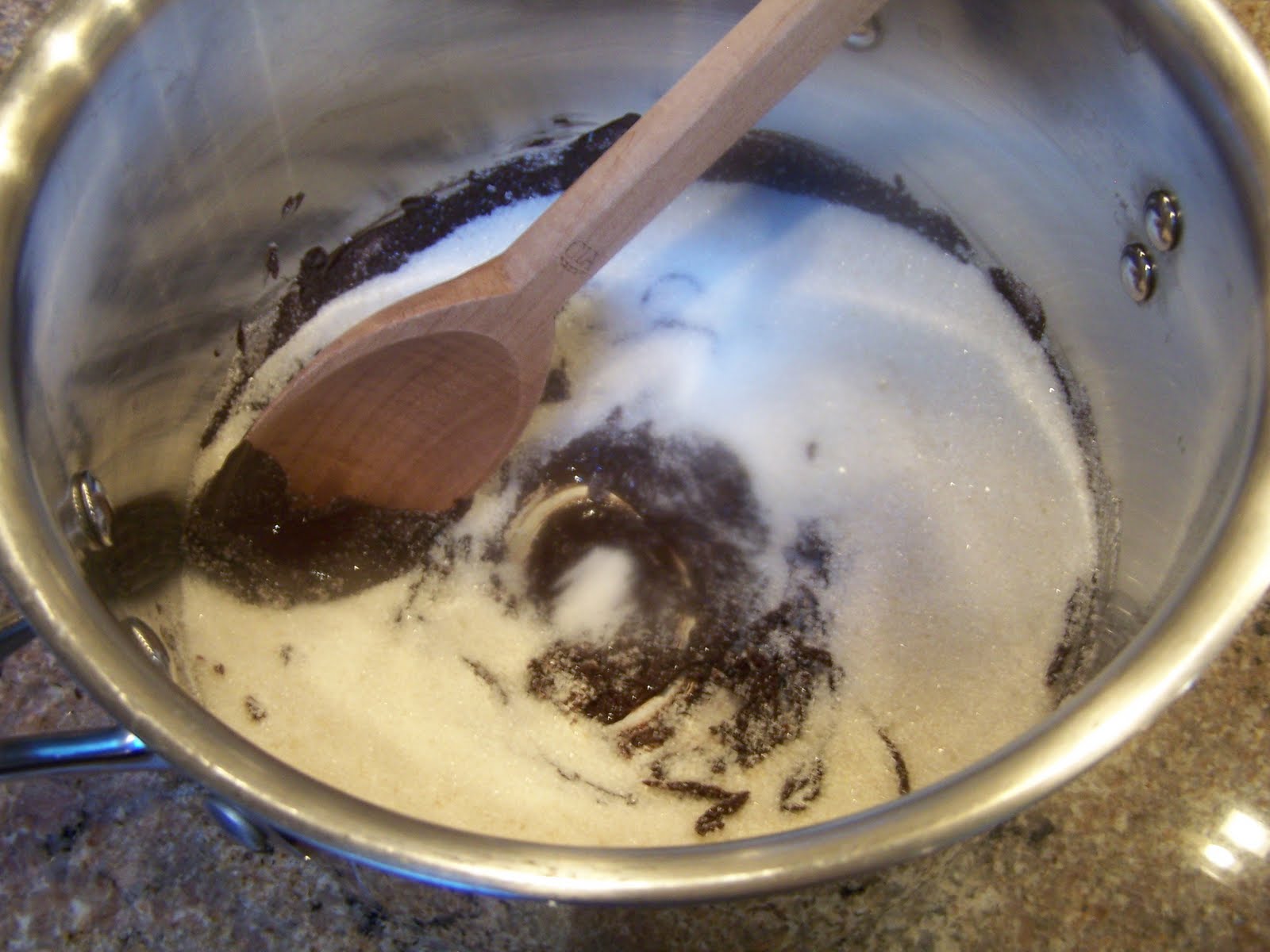
To begin, chop the chocolate thinly and evenly to help it melt quickly and easily. Lauren and I shaved the chocolate so it would melt quickly.

Once the chocolate melts, remove the pan from the heat and stir in the eggs, sugar, oil, baking powder, and vanilla. (You have to remove it and let it cool down a bit so it will not cook your eggs).

Next add the flour and stir until it is completely combined (a quick warning, the dough is thick and heavy, so this last step takes some energy).

Once combined, chill the cookies for 2 hours or until easily handled.

Use a spoon or scooper to make even sized balls (about 1 and 1/4 inch). Roll the dough in your hands to get a round ball, and then roll them through powdered sugar before placing on a baking sheet.
Bake in 375 degree oven for 8-10 minutes or until the edges are slightly firm and the top has cracked. Cool on a wire rack.
Recipe courtesy of Christmas Cookies, 1994.