Treading Lightly
Treading Lightly

Farmers market: eating locally and building community

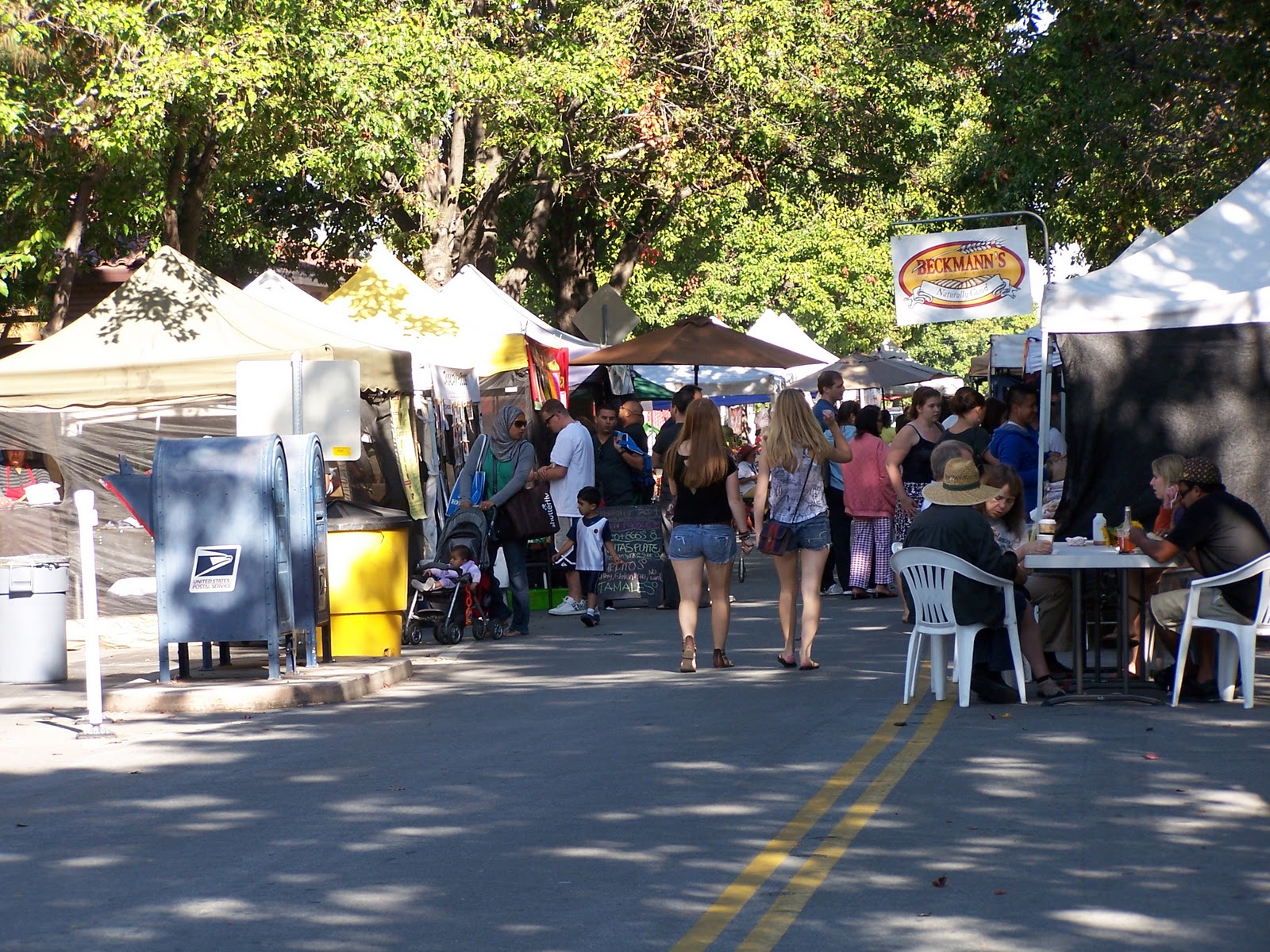
I have heard students talk about the local farmers market since I was a freshman, and yet for a variety of reasons I had never gone to one until this weekend. Even though it was small, the market still provided fantastic local foods, and saved me a trip to the store. 


Farmers markets can be incredible resources and assets to a community. They not only provide a place for farmers and local businesses to sell directly to people, but they also foster a sense of community and encourage people to get outside and interact with one another. 


At the farmers market near campus there were not only vendors for fruits and vegetables, but also bread, baked goods, jams, flowers, jewelry, and ready to eat foods. 


I enjoyed being able to interact with the vendors and see the wide variety of foods grown so close to where I live. The beautiful weather certainly helped as well. 


For Santa Clara students and local residents, check out the farmers market in Franklin Square, Santa Clara every Saturday morning. To find a farmers market near you check your local newspaper as well as searching online (most farmers markets are listed online). 

San Jose Bike Party

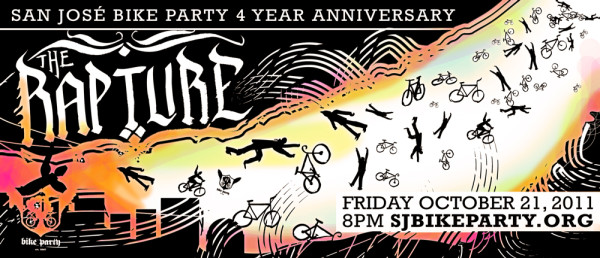
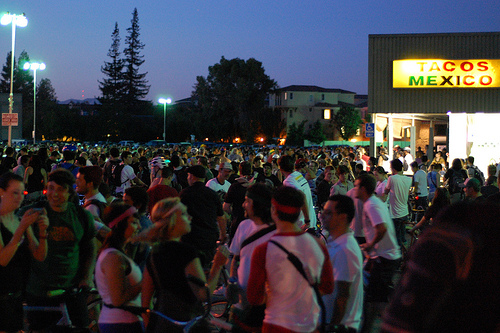
It’s the third Friday of the month and thousands of Bay Area residents are gearing up to make their way to the San Jose Bike Party. Today’s theme is “The Rapture” in honor of the potential end of the world tonight. They have asked everyone to dress up as angels and demons in case the prediction yet again does not come true and Harold Camping needs some help saving face.

Image courtesy of San Jose Bike Party
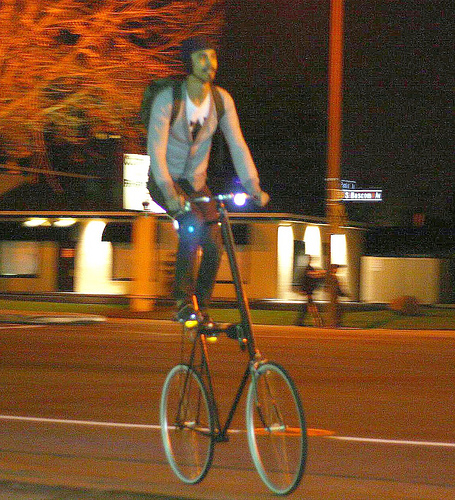
Bike Party has a nearly anything goes policy (except the rules on “How We Ride” and anything unlawful). People will light up their bikes, wear outlandish costumes, blast their music, and even pull couches and seats on trailers behind their bikes for the stops along the route. People ride on everything from rusted out or completely homemade bikes to the top of the line racing bikes.
Image courtesy of Richard Masoner
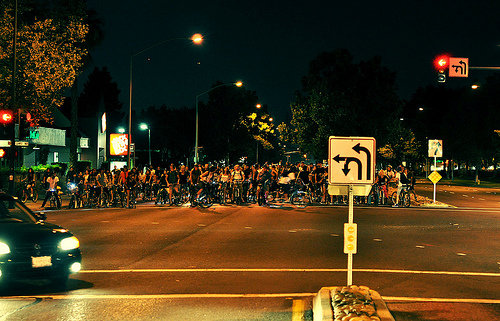
About every 10 miles there is a major gathering in a parking lot where people get off their bikes and dance, meet new people, or show off their special talents (last year a rider did a sort of fire dance for everyone). It’s a community built of frequent riders and those who have to unearth their bikes from the mountains of junk and dust that have been piled on it.
Image courtesy of sjbikeparty.org

If you are an avid cyclist or just want to have a good time with a few thousand other people you should come out tonight and ride with us. For more information check out SJ Bike Party.

GMO – Genetically Modified Organism Infographic

It seems as though genetically modified organisms (GMOs) come up, a great deal of speculation and confusion soon follows. I for one have had assumptions of how ubiquitous GMOs are, but it’s completely different to see the startling figures in graphics.

Image courtesy of Treehugger.com. For larger image go here.

Check back soon for a detailed look into GMOs.

Barefoot running: my new obsession

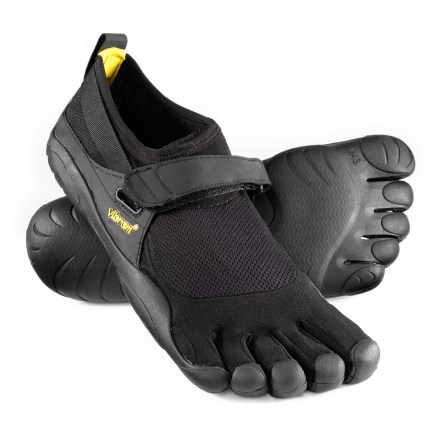
I have to admit, I am a hypocrite. When I first saw Vibram 5 Fingers at work, I made fun of my coworker relentlessly for having “monkey feet.” He kept telling me how amazing they were, and I ignored him and made jokes instead.

Image courtesy of barefootrunningshoes.com
What started out as a search for the perfect shoe to wear while lifeguarding led me to the barefoot running movement and a new love for running.
When I was lifeguarding I needed a comfortable shoe that I could wear all day on the hot pavement, but also one that if I had to jump in I could easily swim in them. I also wanted them to breathe easily, dry quickly (little kids think it’s hilarious to splash the lifeguard), and give my feet more support than flip-flops. I ended up buying a pair of Merrell Pace Gloves.
Image courtesy of eBay.com
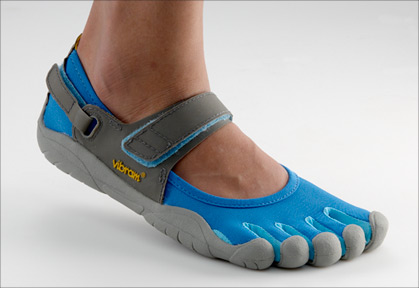
The more I wore them the more I fell in love with a shoe that I could barely feel. After wearing them for a few months and running in them a few times, I decided to go all the way and buy a pair of Vibrams.
A year after making fun of my coworker I was walking out of the store with my new shoes in hand and a huge smile on my face. I had read “Born to Run” and done some more research on the benefits of barefoot running before making the leap. I have always had problems with my feet and ankles, and just by walking in “barefoot” shoes I had been having fewer problems and my feet were getting stronger. It took me a few weeks to get used to running properly (having a mid-foot landing instead of a heal strike) and tone my muscles.
Image courtesy of Vibramfivefingers.it
The enjoyment I get out of running now is incredible. It feels completely different from running in a heavily cushioned shoe that often leads to poor form/body mechanics and increased injuries. Instead I say no to Nike’s child labor made shoes and explore the way my feet were designed to work.
Thinking of going “barefoot”? Things you need to know:
1. You cannot put on a pair of “barefoot” shoes and just take off. You have to work up to running and give your muscles a chance to strenghten. I made this mistake and I do not want anyone else to do too much too fast and give themselves micro-tears in their muscles like I did (you will not be able to run at all for 3-4 weeks if you do, so save yourself the pain and annoyance). Trust me, you want to take it slow. If you normally run 2 miles, run 1/4 to a 1/2 mile in your new shoes for a few times before you slowly build up to running more. Better yet, start walking and work to running.
2. Try running on grass or a track without any shoes and see what you think before buying the shoe.
3. Find everyone you know in the barefoot movement and ask them every question you can think of.
4. If you don’t know anyone, there are great resources online that can answer your questions and give you the support you need.
5. Utilize the online resources that teach you the best way to run (regardless of the shoe you wear, a mid-foot strike is proven to be the most efficient, natural, and safest. Don’t believe me? Barefoot runners have less injuries and are faster. Stanford’s track team and most Olympic runners train barefoot). There are videos as well as blogs that are solely focused on barefoot running and advice.
6. If you have a bit of time, read “Born to Run.” It’s an interesting read and it inspired me to give barefoot running a try.
7. Find the shoe for you. Some shoes are more intense than others. The Merrell Pace glove and a few others are not as extreme and will provide more of a “running shoe” feel without sacrificing the “barefoot” experience. If you are wary of having anything between your toes there are options. I would highly recommend trying on different shoes in the store to see which one feels the most like what you are looking for.
8. Even if you do not like to run, these shoes are amazing for just walking around town, hiking, the gym, and any other outdoor/indoor activity (with some limitations, I wouldn’t wear them as formal shoes.)
I used to hate running — I thought it was one of the worst forms of self-torture. Now I will spend all day looking forward to when I get take off and explore the way my body was meant to move.
Questions? Comments? Feel free to leave them below or on Twitter.

Tweet

Slightly sustainable birthday celebration

Due to the fact that it is midterms, I did not have a ton of time to make anything for my friend’s birthday. In an attempt to make it as sustainable as possible with very little time or resources I ended up having to make cupcakes in papers as well as from a mix (which I am strongly against). Even though I did have to make them from a mix (and they do not taste as good as if I had made them from scratch), I made sure that they were organic and not full of preservatives or other unnecessary chemicals. 


What I could have done to make them more sustainable:
– Buttered the pan or used reusable silicon baking cups instead of cupcake papers.
– Made them from scratch to remove the plastic bags as well as the unnecessary waste from shipping the mixes. 
– Put them in a reusable container that is easy to cary and that my friend could keep.


Although they were not ideal, these cupcakes were still a way to celebrate his birthday without having to buy store-made cupcakes and waste even more resources and plastic packaging (plus all of the staff in the newsroom enjoyed them). 

Tweet

Midterms and growing piles of coffee cups

After only 4 weeks of school midterms are upon us (a downside to the quarter system). This means that students at Santa Clara are staying up later, multitasking, stressing and consuming way too much caffeine. (even as I write this I’m trying to update my tumblr and twitter, write a short paper, and plan the rest of my week so I can get everything done). 


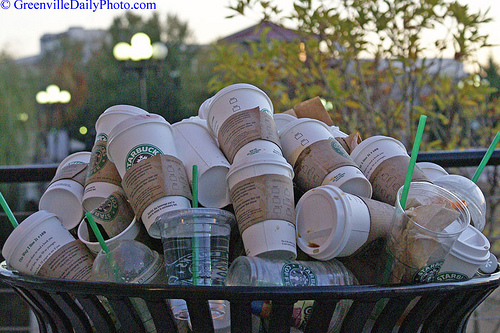
In the beginning of the quarter only a few people would bring coffee to class, but as the quarter marched on the number of paper cups and plastics lids in all of my classes has risen dramatically. Although the coffee itself has a major environmental impact, the single use cups and lids alone are shocking. Trash cans and compost bins around campus are full of the cups. The estimates of paper coffee cups we use per day is well into the millions. According to Chris Jordan it’s over 40 million per day. 


Even though we are all rushing, we need to remember that there is always time to grab our to-go mug, and wash it afterwards (an added bonus is that your coffee/ other caffeine filled drink will stay warmer and test better longer). Just because we are stressed doesn’t mean we need to stress the environment.

Who killed the electric car?

I think Who Killed the Electric Car? may have been the first environmentally focused documentary I ever saw. I came home one day and my parents were watching it, and I ended up getting sucked into it as well.


The movie is about the electric cars that were available in the early ’90s before they were “killed” by the car industry. It’s an interesting look at why it has taken us so long to create viable electric cars.

California Bans bisphenal A (BPA) in baby bottles and sippy cups

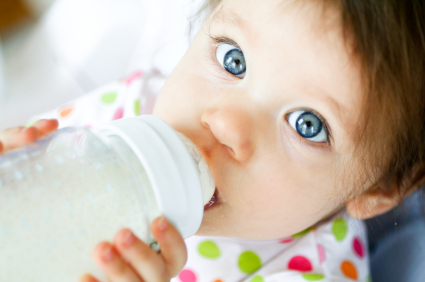
Last night Governor Jerry Brown signed the Toxin-Free Infants and Toddlers Act into law which will ban BPA in baby bottles and sippy cups in California. This is a key step in decreasing young children’s exposure to the hormone disrupting chemical.

Image courtesy of examiner.com

“Governor Brown has put the interests of California’s children first in the face of intense lobbying by the chemical industry desperately trying to defend their use of this hazardous chemical in the products of our most vulnerable,” said Renee Sharp, head of the Environmental Working Group’s California office on their website this morning.

Even though BPA has not been banned from all food products, (such as water bottles, aluminum can liners, or even cash register receipts) this is still a key step that moves us toward the larger goal of a complete ban of the chemical. It is also important to begin with those who are the most vulnerable to the affects of BPA which are infants and toddlers. Ultimately the law that will go into effect on July 1, 2013, proved that with enough support we can stand up to big industries and their forceful lobbying.

Image courtesy of the Sierra Club