Treading Lightly
Treading Lightly

It’s beginning to feel a lot like Christmas… break

For once its quite around campus as the library fills up and people barricade themselves in their rooms to finish all of the things they have put off for the last 10 weeks. Finals start next week and everyone is trying to finish that one last paper. Its peaceful… if you aren’t completely stressed and horrified at the amount of work you have to do.


I bought some holiday tea yesterday to celebrate the occasion and give us motivation to focus and push through these last few days. My roommates even decorated – we have a felt christmas calendar on our door. It’s a tree and an interactive advent all in one. 


Today I will bring my tea to class and day dream about what it will be like to drink it at home, surrounded by family and friends with all of my papers and homework for the quarter burning in the fireplace (not really, I will dutifully recycle them).


To all of the other college students out there, don’t forget to take a break every once and a while. We can do it. Just think, in a few weeks your life is going to be so much better. 

Black Friday hangover

It amazes me what people will do to save a dollar or two on a toy or some other non-essential item. People stood outside of stores on Thanksgiving night and battled each other for the best deals (one woman even used pepper spray against fellow shoppers in an attempt to secure her bargain). 

Image courtesy of Michael Nagle – AFP/Getting Images

But does any of this make us any happier? Researchers have been telling us for years that all of our stuff only increases our unhappiness, despite that quick hit we get from buying it. 

“[Shopping] is like a drug,” says James Roberts, a marketing professor at Baylor University. “Our brains releases chemicals like dopamine and serotonin which actually produce feelings of pleasure, and we can become addicted to those feelings. But money and material possessions will not bring you happiness, and not only that, they can cause more harm than good.” From Good.

 It amazes me the amount of things people believe they need to live. All of the gadgets and other junk we use a few times and then forget about. All of the items we buy to do a single specific thing can usually be done with something you already have. I just don’t understand this constant feeling that we NEED to buy things, that we do not have enough stuff, and that more stuff will make us happier. 


How to avoid the constant cycle of junk:
1. Wait. It seems like as soon as we see an item we kind of like we convince ourselves we cannot live without it. If you can make it 2 weeks without it, you don’t need it. 


2. Dig through what you already have to see if you can make your current possessions work. Also, look online for ideas of how you can make things around your house work for the job you are trying to accomplish.


3. Simple is always better. Why buy a battery powered gadget when the classic, human powered version works just as well? (This is especially true with kitchen equiptment. Why do you need a battery powered wine opener when the world has been drinking wine just fine without it for thousands of years?). 


4. When you are bored, do not go to the mall or online to shop. Read a book, exercise, find a new hobby, or ask a friend to meet you for some fair trade coffee or homemade goodies. 


5. Do not give into peer pressure. Just because the Jones have an item doesn’t mean you need it too. 


Ultimately it takes time to be happy with what you have and avoid all of things you don’t need. But doing so will not only save you money, it will also increase your happiness and contentment with the things you do have. 


So turn off that computer and stay focused on “Cyber Monday.” You do not need any of that stuff anyways, and your family and friends would really enjoy homemade gifts or pure necessities this year. 

How to save more on Thanksgiving

Happy Thanksgiving. Today is the day that everyone looks forward to for the food and sometimes the company. Most of America will gorge themselves, and in a single meal eat more calories than they need for 2 days. As a vegetarian, all I really look forward to is pie.


Thanksgiving is one day a year where the majority of families make enormous amounts of food, and waste a great deal of it. According to Good:

When the original Thanksgiving diners got up from the table in 1621 to loosen their belts, nutritionists estimate that they had ingested about 550 calories per person, the equivalent of eating a burrito from Taco Bell. Flash forward 400 years, and Thanksgiving dinners now pack a 2,000-to-3,000-calorie punch. And while the Pilgrims struggled to grow enough food to survive, the United States now produces so much food that we waste 40 percent of it—about $100 billion worth a year. 

As the country turns its collective attention to food tomorrow, perhaps we can use the holiday to make a statement about our food waste problem by taking steps to conserve, starting with how we shop. Before you head to Costco and buy the largest bottle of vanilla extract possible, consider whether you or someone you know has leftover holidays staples in the pantry from last year. And consider donating this year’s leftover non-perishable goods to a food pantry. Another tip: make a shopping list and refuse to buy anything that’s not on it. This will scare off the temptation to succumb to sample-inspired purchases at Trader Joe’s.

When you finally arrive at the Thanksgiving table, limit what you put on your plate. That way,  you won’t end up with a plate full of food that’s been grazed by salad dressing and cranberry sauce and is unfit to rejoin its casserole dish in the fridge. Leftovers are the best part of Thanksgiving, after all. Jonathan Bloom, author of American Wasteland, recommends the following on his blog to make the most out of them: Ask guests to show up with to-go containers. Otherwise, the host may end up with more leftover turkey, mashed potatoes, and cranberry sauce than she can turn into Thanksgiving sandwiches. Plan recipes ahead to keep you excited about your leftovers’ possibilities, so you don’t get sick of three-day old sweet potatoes. (They’re great in quesadillas.) And don’t be lazy: Pack up Thanksgiving leftovers before descending into a football-and-food coma. That way, they’ll keep longer.

Even food scraps can be turned into vegetable stock, and don’t forget to compost. Follow these steps, and it’s possible to celebrate bounty without being wasteful.

And to all of the other vegetarians and vegans out there, may you enjoy your vegetables and pb&j’s.  

Boycott "Black Friday" and "Cyber Monday"

End the madness! On “Black Friday” and “Cyber Monday” consider the impact of your decisions and opt to keep your wallet in your pocket. What if you gave everyone on your list something meaningful that you made? How will your decisions impact your wallet and the environment?

“Help turn Cyber Monday green
Next Monday, November 28 — the Monday after American Thanksgiving — is widely known as “Cyber Monday,” the year’s biggest online spending day. Last year’s Cyber Monday saw consumers spend some $1.03 billion from the comfort of their own desks — the biggest online shopping day ever (source: Fastcompany.com).
As a reader of Unconsumption, it probably comes as no surprise to you that we encourage the mindful giving of gifts that are good for the planet. This year, like last year, Unconsumption, along with other organizations and bloggers, joins The Nature Conservancy in promoting the idea of “Green Gift Monday” in lieu of Cyber Monday.
The idea is pretty straight-forward: Consider making handmade gifts; or giving gift certificates redeemable for food or experiences or services; or buying items that are vintage; or donating to a charity in a gift recipient’s honor (e.g., “adopt” a coral reef and announce the gift via an e-card), instead of buying new (and perhaps less-meaningful) merchandise for family members, friends, business associates, and others this holiday season. That’s the general idea.
For other green-giving ideas and information, visit The Nature Conservancy’s Green Gift Monday – Gift Responsibly site here.”

This year I am only giving people things they have expressed a need for, things of sentimental value, and homemade goodies. Why give someone something they don’t need or won’t use much? Gifts should be about cherishing the people in your life and showing them you care. I think cookies and other homemade items say it better than anything I could find in a store. 


What are you making this year? 

Sustainable studying

With finals beating down our doors, college students across the United States are barricading themselves in libraries with a constant stream of caffeine and all of the reading they didn’t do all quarter/semester. But last minute cramming (or carefully planned out studying if it may be) doesn’t have to be as big of a drain on the environment as it is on your brain. There are some ways to study sustainably, and maybe even make it more enjoyable:


1. BYOB: Bring your own reusable water bottle or mug.
-You will save money by bringing a refillable bottle or mug with you.
– Your own bottle will keep your drink hot/cold longer than the paper alternative
-In the United States we use more than 40 million paper cups per day. Break the cycle and enjoy your drink from the mug that makes you smile. 


2. Use recycled paper and recycle it when you are done.
– Every year the United States consumes over 90 million tons of paper. This is an average of nearly 700 pounds person. 
– It takes more than 1 and 1/2 cups of water to make one sheet of paper (about the size of a typical soda can).
– Using recycled paper saves trees, energy, water, and landfill space. Keep trees out of the landfill and recycle your paper when you are done. 


3. Study with other people in the library or someone’s dorm room.
– Instead of everyone studying in their own rooms with all of their lights and lava lamps on, get together in a library or common room instead. You will save energy and have more fun studying. 


4. Study during the day to use the daylight
– Turn off the lights, open the blinds, and absorb some of the suns light. Who know’s, it may be the only sun you get for a few weeks. 

Image courtesy of SCU.edu


5. Snack on local, organic food
– Ditch the processed snacks and instead feast on locally grown fruits and vegetables. 
– On average, food travels 1,500 miles to get to your supermarket. Shrink your carbon footprint and support local farmers while fueling your brain. 


6. Drink fair trade coffee or tea
– When you need a caffeine pick-me-up, choose fair trade. 


7. Print double sided
– Duplex printing saves you money and can potentially cut your paper use in half. 
– If you are at SCU you can print double sided in the library.


8. Buy used books
– I would hope that by now you have all the books you need for the quarter, but if not buy used. It’s not only better for the environment, but will give you more money to spend on late night snacks. 

Thanksgiving travels

In a few days college students around the country will pack up and go home for Thanksgiving break. All I have been thinking about this week (aside from all of the homework I have to do) is the few cherished days I will have before dead week and finals. But for many students, they are faced with the choice to spend hundreds of dollars to fly home, or spend Thanksgiving alone and wait the two weeks to go home for Christmas break to see their families. 

Image courtesy of We Love DC

Students and faculty have suggested to the university that instead of having two weeks of school after Thanksgiving break and before Christmas break, school should start two weeks earlier and Thanksgiving week should be the first week of Christmas vacation. This would not only allow students to save money on plane tickets and allow more students to be home for Thanksgiving, it would also severely reduce our carbon footprint as an institution. Having students leave campus two weeks earlier means that the electricity to all of the dorms could be shut off 3 weeks earlier. It would also save the carbon from all the students who will travel home twice in such a short amount of time. 


Hopefully Santa Clara will consider making the changes that other universities have so that we can start school a little earlier and end the quarter before Thanksgiving. 

What to do with your red cups

Students around Santa Clara who want to reduce their waste are often left standing in front of trash and recycling bins trying to decide where to put their red cups. After a great deal of deliberation, most red cups will still end up in the landfill. So what are the options for the ubiquitous red cup?


After a long weekend at most universities red cups fill trashcans like confetti after a surprise party. In order to be able to recycle red cups locally, it really depends on local recycling facilities. There is currently a great deal of debate and confusion on if you can recycle red cups in Santa Clara.


However, across the U.S. TerraCycle is offering a free program to all college students (or anyone else) who would like to responsibly dispose of their used red cups. The money they make from the recycled materials is given to a charity of your choice. All you have to do is:


1. Sign up online


2. Fill up a cardboard box full of cups in order to ship as many as possible at once.


3. Go online and print out your pre-paide postage label and put it on your box. You can drop off your box to any local UPS. 


For more information

Image courtesy of TerraCycle

Although this program is a great way to divert waste from the landfill, at least for a few years, ultimately it would be best to avoid the use of red cups all together. Reusable cups are always the best choice. 


To see what else you can recycle, check out TerraCycle.

Tales of a paper towel

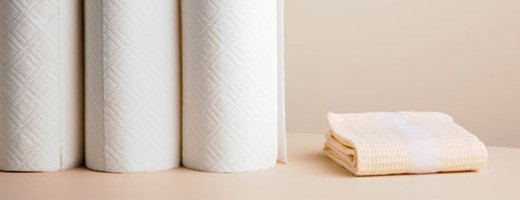
My roommate keeps paper towels in the bathroom that she uses after she washes her hands. My heart breaks a little bit every time I see her tear one off and throw it in the trash. However, her behavior has made me realize that the paper towel industry has made us forget the alternative completely — a reusable towel (you know, that regular, old-fashioned, cloth towel). 


Image courtesy of Savybrown.com

Instead of using a paper towel for everything and then throwing it out, consider using a regular towel instead that can easily be washed and reused. If you buy a single towel for $5 or a roll of paper towels for $1, that towel will last you more than 5 years, but that roll will most likely be gone in a few weeks. Some families will save more than $100 a year by no longer using paper towels. 

It seems like we have forgotten that these:
Image courtesy of thecontainerstore.com

 Come from these:

Image courtesy of Seventoten
Paper towels are not only manufactured from trees that need to be cut down and processed, but they also take a great deal of chemicals to make. In the process of creating the paper towels the wood is bleached and coated in chemicals. Anything that is made out of wood and is as highly processed as paper towels also use a great deal of energy, not to mention the fuel and emissions to take the tree from the forest, to the factory, and ship it to you. Plus, the carbon reducing trees you cut down to clean up your spilled milk go straight to the landfill and increase our carbon emissions. 

So the next time you spill something or want to clean your windows (or any other surface), put the paper towels back in the cabinet and pull out your regular towel instead. Your wallet and the environment will thank you.