Treading Lightly
Treading Lightly

No Makeup Challenge

Could you go a day, a week, or two weeks without putting on a single bit of makeup?

The ladies who wrote the book No More Dirty Looks challenge women to try to leave the house without makeup for at least a day. Why? Because the media is constantly telling women that we do not look good enough if we do not slather on piles of products. Many women have been wearing makeup for so long that they no longer feel comfortable leaving the house without it.
      Image courtesy of Affordable Health and Beauty
Instead of feeling insecure, embrace your beauty and share your real face!
The No More Dirty Looks webpage had a no makeup challenge where:

“All we want is a picture and a promise. One day this week, leave the house—go to work, go do groceries, go to a restaurant—without makeup.”

Why did they start this challenge and why should you do it?

“The reason for this challenge is to rediscover our faces without makeup! A recent British Study found that 70% of women wouldn’t leave the house without their makeup tools— half of those said they wore makeup 24/7, and 40% said they’d be embarrassed to be seen without makeup in front of friends or coworkers.

We know it’s a bit scary, but you’ll be surprised—it’s kinda liberating, and may make you rethink how you apply makeup. For example, we’re loving the bold lip on the bare, no-mascara face these days… And once you’ve ditched it all, that kind of experiment won’t be so intimidating.”

For some inspiration, check out the pictures of the women who completed the challenge:

Image courtesy of No More Dirty Looks

As an added bonus, think of all the time you will save!

Eco-Friendly Nail Polish

We all know that horrible, eye-burning smell that comes with nail polish, and it is one of the clearest clues that something is not right.

Even though you are not putting the polish on your skin and absorbing it, when you put it on and take it off you are breathing in toxic chemicals.
As more and more studies are coming out about the affects of toxic chemicals on nail salon workers, it is becoming increasingly clear that something needs to be done to prevent the harm of others and ourselves for the sake of having a little color and personality to our nails.
Most polishes are full of hazardous chemicals including formaldehyde, toluene, and dibutyl phthalate. These chemicals are being linked to cancer as well as respiratory problems and should clearly be avoided. No one should need to look like this:

Photo courtesy of Louise Daddona
I have spent a few years boycotting nail polish (both because I went through a phase where I decided it was too much work and too girly, but also because I wasn’t willing to expose myself and my family to the toxic fumes). I think I am finally ready to break it.

I have only tried a couple of these polishes or removers, but I have checked to make sure they all agree with the Environmental Working Group’s (EWG) ratings and that they are in fact safer than their toxic laden counterparts.

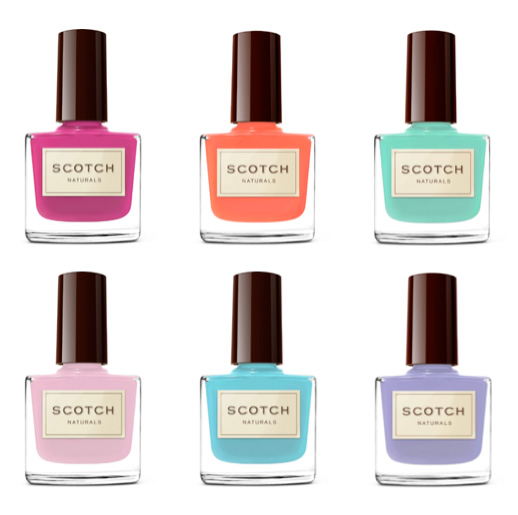
Photo courtesy of Scotch Naturals
Scotch Naturals: I love the colors. The polish remover takes a bit more effort than its toxics-laden counterpart, but it still takes off conventional and eco-friendly polishes. The polish lasts well, and it’s really easy to apply another coat when it starts to peel or grow out.

Image courtesy of honeybee
Honeybee says their polishes can be removed with their remover or with vodka, which is great for people over 21, but not helpful everyone else.

Photo courtesy of Priti NYC
Priti NYC is not on EWG; however, on their webpage it says “Priti Polishes have been completely formulated without any formaldehyde, dibutyl phathalate (DBP), toluene, and camphor.” They have a soy polish remover. They also have the most color options of the companies highlighted here.

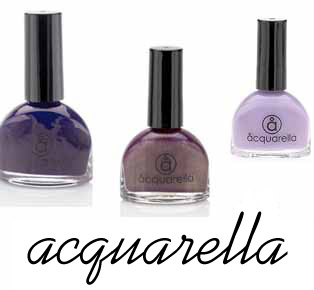
Photo courtesy of Acquarella

Aquarella is also on EWG and has their own polish remover.

Skin Deep: The best cosmetics database

Are you overwhelmed and unsure if any of your personal care products are safe? Do not despair! The Environmental Working Group’s Skin Deep Cosmetic Database is loaded with products and information about ingredients.

Photo courtesy of Skin Deep
They rate products on a scale of 0-10 with 0 being completely safe and 10 being dangerous. Each rating gives a detailed description of why it was given that rating and helps you easily identify the harmful chemicals. The database currently has 68,807 products including men’s and women’s personal care, childcare products, and many other items we put on our body. This site has never let me down. I have always been able to find specific products as well as browse for the safest product.
Don’t just trust me? What about the other 243,122,877 searches since 2004? Check it out! Just enter the name of the product and the brand or browse through and see how the things you use every day rank.

Poisonous Parabens

What they are:

Parabens are chemical preservatives that are added to cosmetics (personal care products), drugs, and food. They are incredibly common and can be found in most personal care products including toothpaste, deodorant, lotion, shampoo, makeup, shave cream, and many more.

Why they should be avoided:

Parabens are also known as a “gender bender” because they mimic the hormone estrogen. They have been identified as being disruptive of normal hormone functions and exposure to parabens has been shown to increase the risk of breast cancer according to the Journal of Applied Toxicology. Parabens have been found in breast tumors and are commonly found in most people’s blood when tested. Parabens have also been linked to allergic reactions and common dermatitis. They are also especially dangerous for unborn babies and small children because they are very sensitive to hormones and anything that disrupts normal hormone function.

Photo courtesy of CBS News
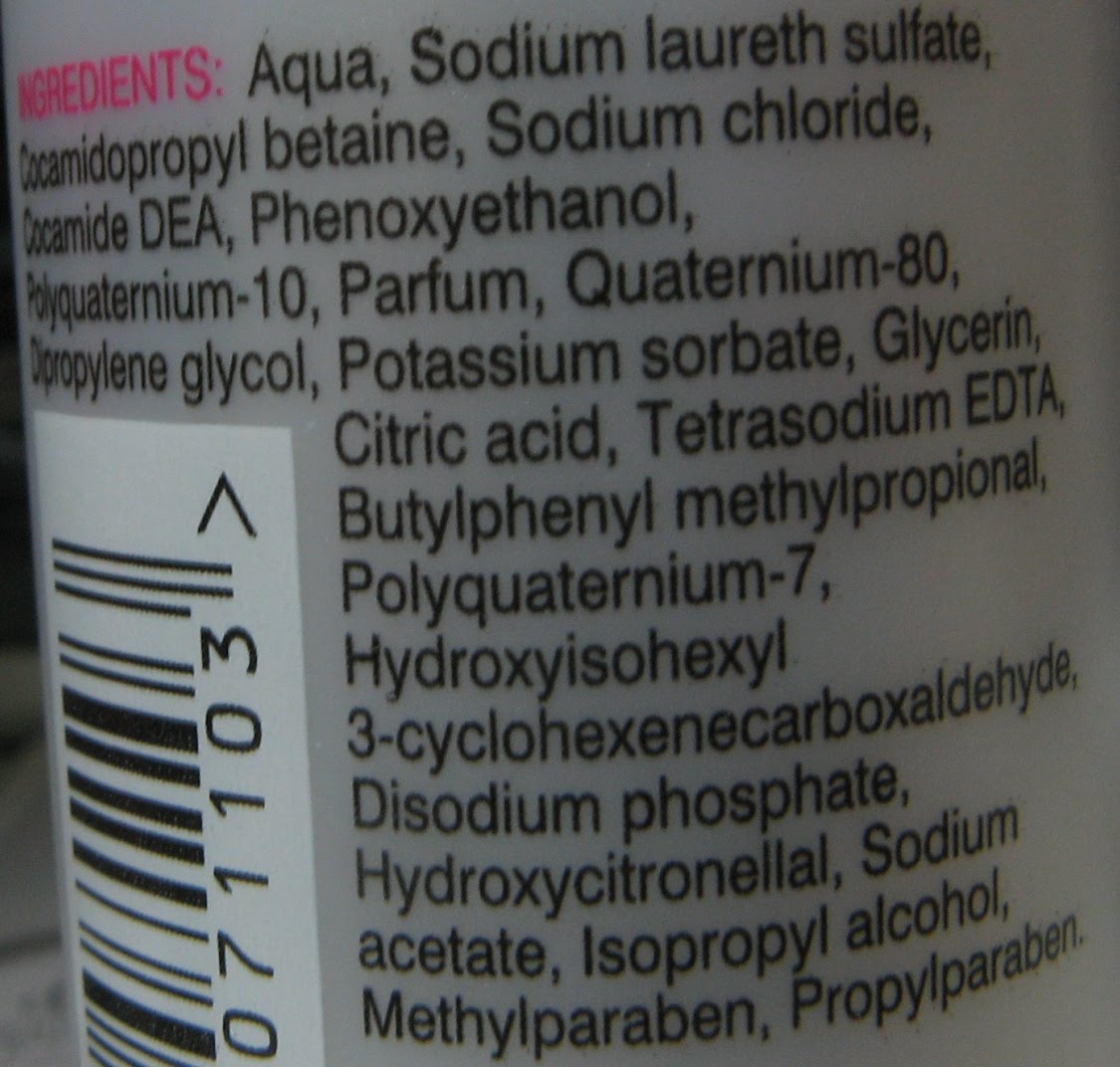
As with all things we put on our skin, parabens are absorbed into our bodies and end up traveling through our blood stream. It is incredibly important to consider what you are putting on your body because it ends up in your body. If you read the ingredients list and think “I would not eat all of these chemicals” then why would you put it all over your hair and skin where it will end up in your body anyways?

If you are wondering how it is possible that such a dangerous chemical could be used so widely and without anyone stopping it, the FDA makes it pretty clear:

“The Federal Food, Drug, and Cosmetic Act does not authorize FDA to approve cosmetic ingredients, with the exception of color additives that are not coal-tar hair dyes. In general, cosmetic manufacturers may use any ingredients they choose, except for a few ingredients that are prohibited by regulation.”

Then who is looking out for me?

It is time to be an active consumer and help your friends and family get informed and protect themselves. See what you are using now and before buying a product be sure the check the ingredients label and be sure there are no parabens listed on it, including methylparaben, propylparaben, and butylparaben.

Photo courtesy of But a Whisper

Watch out! When you see “fragrance” as an ingredient it can (and often does) contain parabens. As part of a protection for companies’ signature scents, the ingredients do not have to be listed, even if they could contain chemicals that can harm consumers.

Want to know more? Check out www.scorecard.org

Sources:
Books: The Big Green Purse by Diane Maceachern and Gorgeously Green by Sophie Uliano
websites: The Good Human, FDA, Breast Cancer Fund, Journal of Applied Toxicology and Environmental Working Group

The Story of Cosmetics: Are you slathering your body in toxic chemicals?

This week I want to focus on all of the chemicals we place into our body and all of the waste we create through the use of cosmetic products. Our personal care products are supposed to make us cleaner right? But what if they are really making us dirtier and exposing us to toxic chemicals?

If you do not have time to watch  The Story of Cosmetics, you can start simply by going into your bathroom and see if you can identify any of the ingredients in your toothpaste, shampoo, soap, or shave cream. If you cannot pronounce or understand the chemistry list on the back of the bottles, don’t worry, you will soon.

But I recycle

Lately around campus I have heard a lot of people claiming they are “green” because they recycle. As glad as I am that instead of reusable materials going to the local dump they are hopefully going to be remade into something new, this still does not address the fact that those materials still need to be created.

Before I continue let me be perfectly clear, I love recycling and I want everyone to recycle all of the products they can instead of throwing them in the trash. However, I want to highlight the energy it takes to create these products in the first place, to ship them to you, to transport them to a recycling center when you are done, to create a new product, and finally to transport that product to its next life.
Instead of simply recycling to keep our conscious clear, what if we decreased the amount of materials we use to begin with? Do you really have an idea of the total amount of things you throw away or recycle? I don’t.
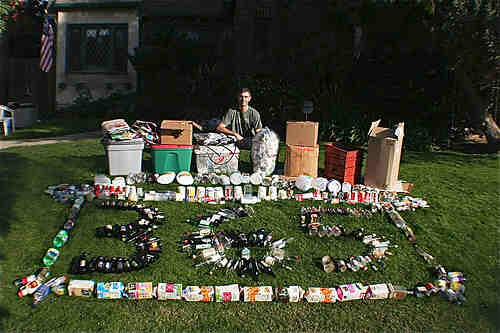
Interesting news articles, blogs, and documentaries have sprung up in the last few years showing us what it would be like if we kept our trash for a year. This means canceling the garbage service and finding a space in the house or the garage to store your trash for a year.

Photo courtesy of Save Your Trash
Don’t panic! I am not asking you to do this, just to think about it. Consider where you live as a boat and that whatever you bring on to it stays there for a certain amount of time (a day, a week, a month, a year, ect.). Does this change the way you see all of things you have the luxury of putting on the curb every week? It also highlights the fact that there “is no such thing as away” when you are throwing something out or recycling it. All of these things pile up somewhere, whether it’s in your house, a recycling center, or a dump. No matter where it goes, we are still responsible for creating it.

Photo courtesy of Sustainable Blog
Instead of relying on the fact that you recycle to keep your conscious clear, what if you also added that you use as few resources as possible (whether they are recyclable or not). To do this try to be conscious of every item you use, not just the ones in your home including napkins, disposable or compostable utensils, paper, cardboard, food wrappers, cans, bags, coffee cups… the list of things is endless.
Need some inspiration? Check out No Impact Man and the challenge he set for himself and his family.

Minimalist Minefield

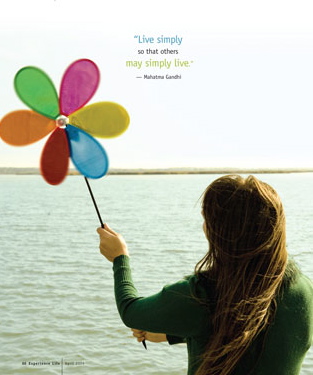
I have come to learn that there is joy and simplicity in fewer things. Lately I have been more and more drawn toward minimalism, but at some points I feel overwhelmed by all the things that I need and that I use daily. I finally realized that minimalism is not living with a set number of objects, but rather it is living with the bare minimum that keeps your life productive, functional, and satisfying.

Photo courtesy of Experience Life

Today I will give you a few tips and tricks to break out of the clutter of your stuff and hopefully help you reach a new understanding of the things you own.

1. Before you can begin you have to understand and accept the fact that objects do not and cannot make you happy. Buying things and having more things do not increase your happiness.

2. To get started on reducing your clutter, consider all of the items in your home or room that you haven’t used in a month, 6 months, a year, or you cannot even remember the last time. This is a pretty clear indication that if you sold it, donated it, gave it to a friend, ect., you would not miss it or need it.

3. If you are unsure of whether or not you still need an item, set it aside for 1-3 months. If you do not need it in that time, it can be let go.

4. If you feel uncomfortable with trying to massively purge the objects in your life, start with stopping the flow of new objects in.

5. One major place that most people increase the items they own are clothing. Do not be afraid to dive into your closet and decide if you really need a different pair of shoes or pants for each day of the week. Spend some time matching your clothes and realize all of the options you have with a only a few items. Consider passing some of the items you may no longer need on to someone else.

6. Play a little game. See how many objects you use in an hour or a whole day. If you are really ambitious, start trying to count all of the objects you own (this is much easier for the college students who live in a single room with one bowl and one fork, but it is not impossible for everyone else!)

7. For those of us who move out every year or who move frequently, it is much easier to get an understanding of all of the things you own when you have to carry it to someplace new. While preparing to move out (or hastily packing if you did not plan ahead) take note of the things you are putting into boxes that you did not even know you had. Also ask yourself if you really need all of those things (after you spent all day moving them its much easier to let them go : ) )

Along the way do not forget to enjoy the progress you have made and feel the satisfaction that comes with simplifying your life.


Quick tips to save money and make an educated consumer decision

One of the biggest steps in decreasing our consumption of personal items it to bring awareness to our motivations behind buying objects as well as the consequences of our decisions. These tips bellow give you some quick things to consider that will help you to decrease your consumption and save you money.

1. Ask yourself if you need the item or if you desire the item. If it’s a desire, do not buy it.
2. If you need an item considering borrowing it, buying it used, or making it before buying it new.
3. If you want to buy something try waiting a week or more and see how you feel about it after that time. I find that once I think about buying something over a week instead of impulsively getting it that I not only save money, but also unnecessary purchases.
4. Stay off Internet shopping sites. I know these are tempting to visit when we are bored, but it only leads to desires of things we do not need.
5. Clothing: The media is constantly telling us that we need to buy new clothes because we are not in fashion, the clothes we have are too old or they make us look fat, or that we would be happier if we looked like the models and bought their clothes. Although clothing is certainly a necessity, in our culture it has become a symbol of opulence and status.
Do we really need 7 or more pairs of jeans or 20 t-shirts? Instead of trying to buy things that fit in with the latest fad, considering investing in pieces that will last you years. Not buying the latest trends will not only save you money, but it will also prevent you from buying items that in a few years or less you will no longer wear. Focus instead of maintaing a few key items that will last for years.
Question the clothes crammed into your closet and drawers. In the Zero Waste Home Bea only keeps 6 pairs of shoes, 7 tops, 7 pants, and 2 skirts. The boys of the house have 3 pairs of shoes, 7 casual tops, 4 bottoms, and 1 dress shirt. Could you live with less?
Challenge yourself to resists the latest fashions that will quickly go out of style. Stay away from malls and browsing online to keep you from being tempted by things you do not need. Go through your closet and consider all of the staple items that will last you for years. When considering a purchase, question how long it will last you, how often you will wear it, and if you really need it or if you already have something that will do the job just as well.
It takes time to get used to not wanting and buying all of the things we see on TV, in magazines, in ads, and what other people have, but once we break out this cycle it can be freeing.
Come back soon for a post on how to pare down your unnecessary possessions and get some freedom and simplicity back into your life.